








Wine glasses, how to use
Wine goblets: how they are, how many there are, and how to use them at the table. Advice on how to enjoy great wines with right care that they deserve.
By Donatella Cinelli Colombini – Fattoria del Colle – Casato Prime Donne

images
No worries, it’s easier than it seems. First of all wine glasses are goblets so they have a stem and a cup. This permits one to hold them by the stem without dirtying the cup with your fingers. Better not to touch the cup unless the liquid is so cold that it requires “body warming”. To avoid that the cup gets opaque do not wash long after use, don’t leave wine in them all night and be careful how you put them in the dishwasher.
The glass must be perfectly transparent, not coloured, not incised, not engraved but nice and smooth.
The glass must be nice and thin so crystal is to be preferred or new materials of new technology which unite thinness with robustness. The true inconvenience in crystal is, in fact, other than the cost, the fragility, which with the innovative materials is undoubtedly lessen especially in the stem.
Glasses must be odorless so better not use soap for dishes which are very perfuse, and short rinses, if you are not sure after the wash cycle, continue with a brief cycle with no soap. Avoid keeping the glasses in places where they get bad odours such as the dishwasher, wooden cabinets if treated with chlorine based products. Remember that the “smell of cork” the incredible TCA is obvious only when the wine touches the glass so the contaminated glass reveals itself only when used. In doubt it is better to wash them again with soap before putting them on the table.
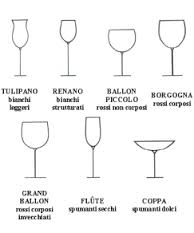
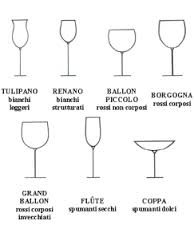
There are 4 main glasses: the glass for white wine or young red shaped like a
wine-glasses (1)
tulip, the glass for important red wines with a balloon shaped cup, the flûte for sparkling wines, with a long and narrow cup, the small tulip shake glass for passito and sweet wines, that many thug serve in the big balloon shaped glasses for red wines to emphasize the aroma. The wide glass for bubbly sweet wines is out of use now, but who has these glasses does well to continue using them.
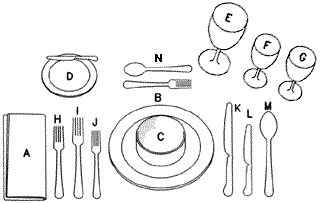
On the table the glasses must be placed from right to left in the order in which they will be used. On the far right the tulip shaped on for the whites and to the far left the tulip shaped one for the dessert wine.
To place more than 4 glasses per guest is definitely uncomfortable as is substituting the wines during the meal unless it is a gala dinner and one has an army of water.
set the table
When the list of wines which are to accompany the meal is very long it is better to use a jug into which the guests can empty their glasses before pouring in the next wine.
To avoid mix ups I suggest a cup shaped water glass, so with no stem. Once, in fact, the largest glass was for serving water, and so still today this creates some confusion among the more traditionalists who end up pouring water into the red wine glass and end up feeling embarrassed.
Finally, never pour the wine into the glasses before the guests sit down. It is a terrible habit!