A TESTAMENT TO ENVIRONMENTAL COMMITMENT: ORGANIC FARMING THAT LEANS TOWARDS THE BIODYNAMIC REGIME, ALONGSIDE EFFORTS TO ENCOURAGE SANGIOVESE TO RESPOND ON ITS OWN TO CLIMATE CONDITIONS AND MOULDS.
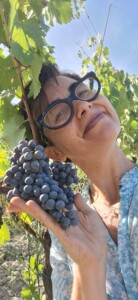
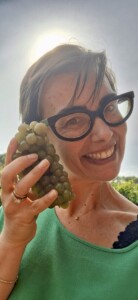
Violante Gardini Cinelli Colombini shows Sangiovese for Brunello Casato Prime Donne
By Donatella Cinelli Colombini, winedestination
Cultivation at both Casato Prime Donne and Fattoria del Colle is entirely organic and has been certified since 2018. Paradoxically, in fact, to display the “green leaf” symbol, one must pay an external company to conduct inspections. Organic farming is a cultivation system that uses fewer chemicals than conventional methods, but—naturally—that alone is not enough; consequently, we adopt many practices from biodynamics. In summer, for instance, we use clays—specifically kaolin—to shield leaves and grape clusters from the sun. At other times, we use products derived from oranges, seaweed, and even propolis.
To combat certain pests, like spider mites, we buy predators from bio-factories. The first time I received the box containing the little bags of predators, I was afraid—thinking, “Watch, these things are going to jump on me”—but then I saw that they have no interest in humans. In some cases, such as with the vine moth, there is a mating disruption system that prevents them from reproducing… It’s a dirty trick to play on these insects, but for them, it’s better than insecticide.
MUCH MORE THAN ORGANIC
Our fertilizers are natural, too; however, after years of using mature organic manure, we switched to pelleted organic fertilizer. Although it costs more, it doesn’t cause grass to overrun the vineyards, leaving us free to decide exactly what grows beneath the vines. In the vineyard, it is essential to avoid anything that competes with the vines for water or grows so vigorously that it creates a damp environment conducive to mold. In winter, we sow a plant mix—or legumes, specifically field beans. This cover crop is subsequently tilled into the soil to make it lively, fertile, and loose.
Weather stations provide significant help in reducing chemical use in the vineyard by monitoring rainfall, wind, and temperatures, as well as other seemingly minor factors—such as the temperature 30 cm underground.