







THE VALUE OF “ONLY THERE” IN TOURISM
FROM TOURISM SHOPPING BASED ON AUTHENTIC, IDENTITY-ORIENTED, AND EXCLUSIVE PRODUCTS TO THE ECONOMIC AND SOCIAL STRENGTHENING OF TERRITORIES. THIS IS NON-CANNIBAL TOURISM.

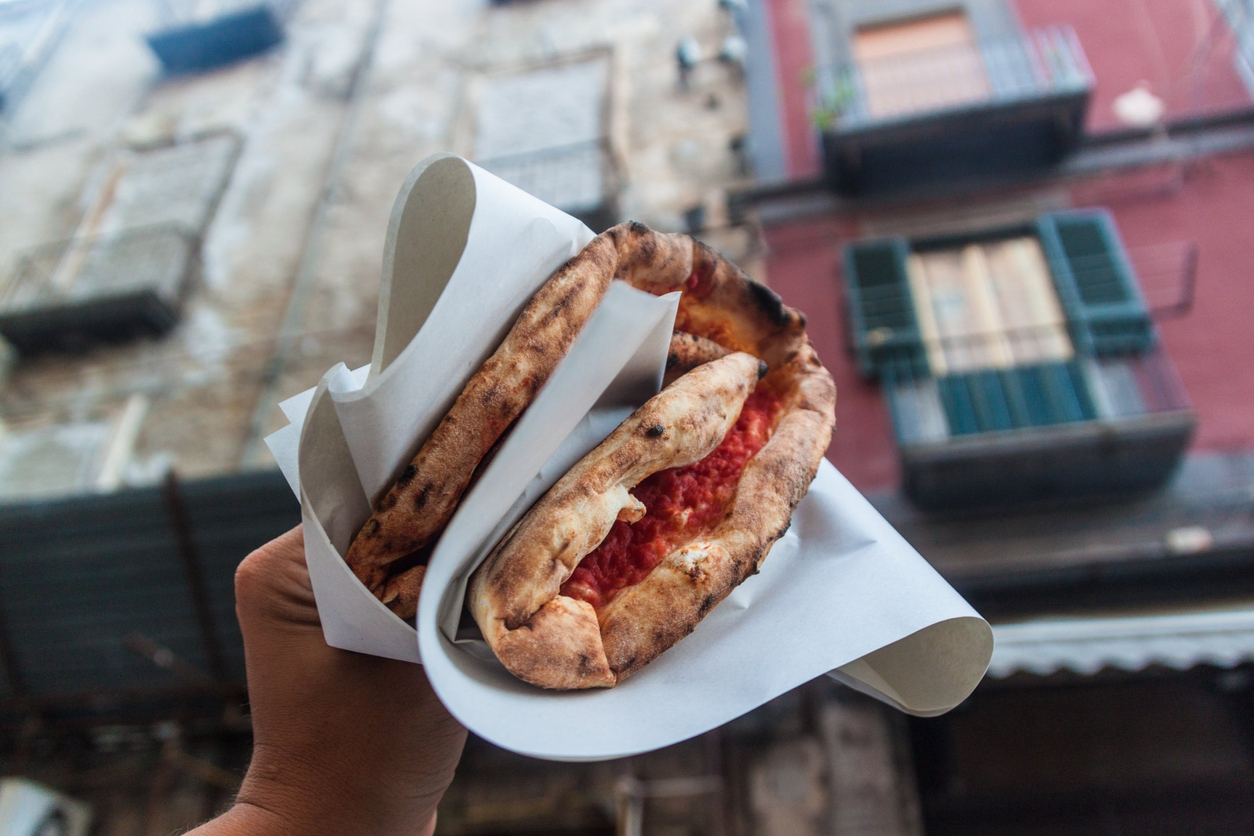
Famous street food in Naples – pizza margherita. Authenticity at its best!
By Donatella Cinelli Colombini, winedestination, Casato Prime Donne Montalcino, Fattoria del Colle Trequanda
When I first went to the UK, I bought a kilt that I wore for years. I was 17, and in Italy, especially in Siena, it wasn’t possible to buy anything similar. There were pleated skirts with tartan patterns, but not in the same wool and not with such beautiful designs.
Over the next 50 years, the industrial production of clothing, food, and originally handcrafted objects, as well as globalization, led to a progressive diffusion of “ethnic products” in world markets. Kilts could also be purchased in Tuscany and later online, at prices much cheaper than my first tartan skirt. But the quality was no longer the same, nor was the charm of an authentic object purchased in the production area.
Once upon a time, the greatest appeal of travel was the possibility of immersing oneself in a reality different from one’s own, where the sights, lifestyle, sounds, flavours, and smells allowed one to discover a civilization whose artistic monuments were the jewels of its crown.
HOW GLOBALIZATION AND OVERTOURISM HAVE KILLED LOCAL PRODUCTS
Today, overtourism, hit-and-run shopping, the transformation of destinations, encrusted with shops selling fake souvenirs, and living like tourists instead of residents… has led to an erosion of local identity. But in the end, the reaction came: “Authenticity is more important than uniformity, local beats global, a product’s history is as important as the product itself,” writes the TSI website.

Toscana Lovers Siena Bagno Vignoni and Cortona excellent Tuscan handicraft
Tourists are hungry for authentic experiences and things to do. This isn’t a niche market, but a rapidly expanding segment. According to recent analyses, it already represents over 30% of European and North American travellers, with annual growth of 15-20%. Another important factor is that these tourists spend, on average, 40-60% more than traditional travellers because they’re attracted by uniqueness and difference, rather than the lowest price
AUTHENTICITY BECOMES A VALUE AND A TOURIST ATTRACTOR
Authenticity acquires economic value, and owning something that can only be made there increases tourist appeal. “Cheese produced using traditional methods, fabric woven on historic looms, wine from nearly forgotten native grape varieties: these products tell stories, embody knowledge, and connect visitors with the profound identity of a region. And for this reason, they are perceived as goods of superior value.”
OPPORTUNITIES AND RISKS IN THE SUCCESS OF AUTHENTIC PRODUCTS
Tourism creates an enthusiastic clientele willing to pay fair value for a handmade object, enabling artisans to survive.
The economic success of authenticity, unfortunately, has led to counterfeiting. Products passed off as local but sourced from external industrial chains, invented stories, and fake traditions.
For this reason, many regions are developing certifications and collective brands that guarantee authenticity, similar to the DOP-IGP and DOC-DOCG certifications for food and wine.
TERRITORIES THAT INVEST IN AUTHENTIC PRODUCTS BUILD GREATER LOYALTY
Territories that protect, promote, and learn to showcase their traditional products trigger a multiplier effect. They create a sustainable and virtuous economy. They become more attractive, increasing their visitor flows and achieving visitor loyalty rates above 60%, compared to a national average of 25-30%.
Ultimately, tourism attracted by authentic products can be a great resource for lifting inland areas out of economic and social marginalization, but it must be managed well by creating a certification system, digital communication, and a network of tourism offerings.