








WHAT A WINE TOURIST SEES IN MY WINERY IN WINTER
IN WINTER, NEW BARRELS ARRIVE AND THE OLD ONES ARE REMOVED. THE FEW WINE TOURISTS ARE TREATED LIKE VIP GUESTS AND ARE THE FIRST TO TASTE THE NEW BRUNELLOS.
New barrels in the cellar Tuscany Brunello Casato Prime Donne Montalcino
by Donatella Cinelli Colombini, winedestination
Wine tourists flock to our wineries at Casato Prime Donne in Montalcino and Fattoria del Colle in Trequanda from April to November, but the peak season is September and October. However, the wineries are open even in winter, though reservations are absolutely essential as the reception service is by request only.
The few visitors we do have have tangible advantages. They are pampered, and if they want to stay a few more minutes, they aren’t pressured by le next tourists.
IN JANUARY YOU CAN BE THE FIRST TO TASTE THE NEW BRUNELLO
For us Brunello producers, the new vintage begins on January 1st, so wine lovers who visit my cellars in the first month of the new year can sample and take home an exclusive new wine to offer to friends, since only a few journalists have already tasted it. Typically, at this stage, Brunello is still slightly closed, like any wine destined for long aging, but it has greater energy, offering a beautiful tasting experience for those who drink it.
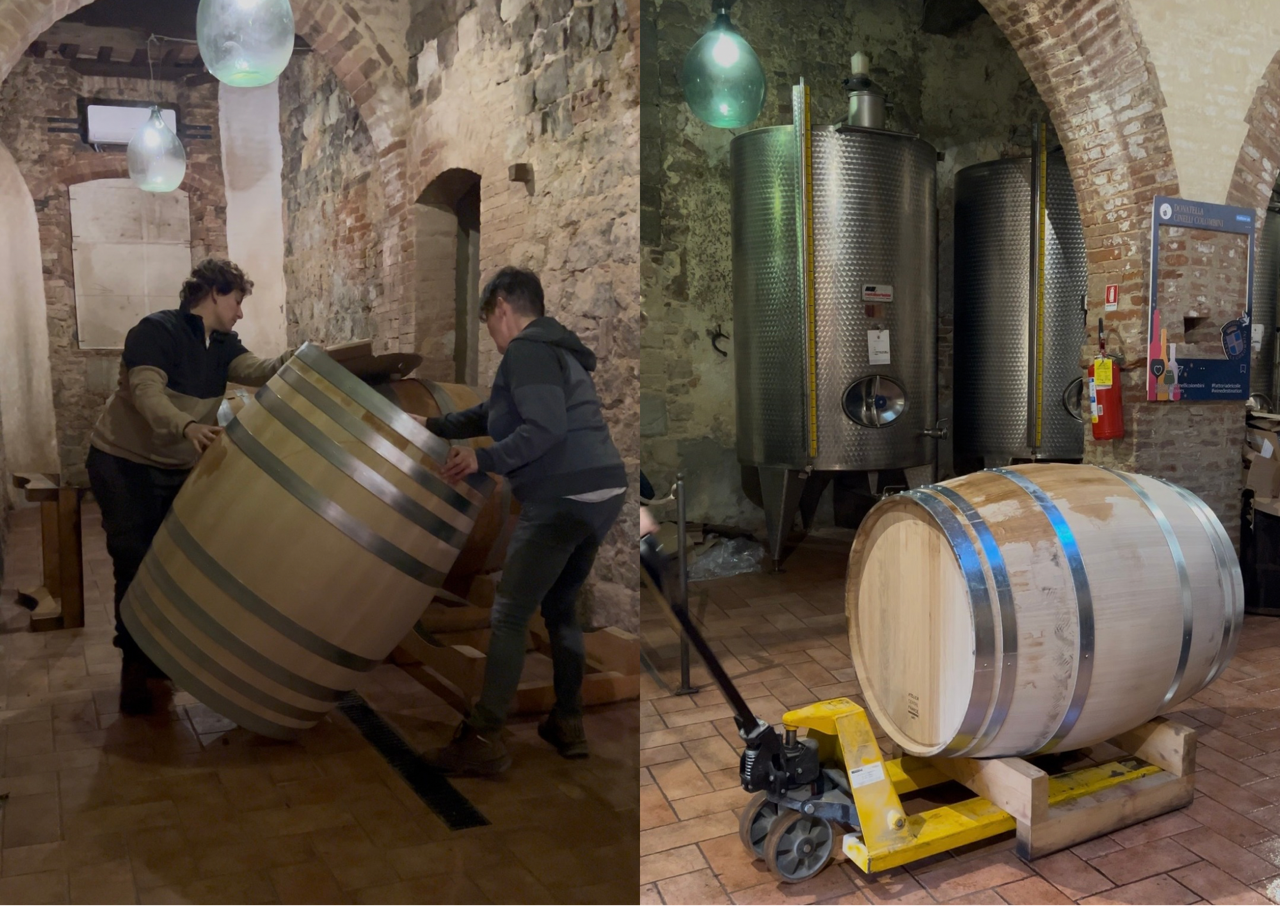
FROM NOVEMBER TO JANUARY, NEW BARRELS ARRIVE IN THE CELLAR
The winter months are the time for racking. The old barrels leave the cellar and the new ones move in. It’s a bit like moving house! When replacing large barrels, it involves very complex operations, and the cellars appear in disarray. The new oak barrels are “conditioned” by filling them with water and then emptied. The old barrels are washed, steamed, sterilized with lamps, and, in the old-fashioned way, by igniting a sulphur strip or wick. Hygiene is essential. The lowering of the wine’s pH has made it vulnerable to Brettanomyces yeasts, which cause a terrible sewer smell. To prevent them, cleaning the barrels is essential.
HOW LONG DO OAK BARRELS LAST AND WHAT DO THEY BECOME IN THEIR SECOND LIFE?
Barrels last 15-20 years, tonneaux 4-5, and barriques 2-3. After their winemaking life, oak barrels have a second life in gardens and vegetable patches. We cut the tonneaux in half, fill them with soil, and grow lettuce in them. Unfortunately, their bending makes them unusable for carpenters. A better fate awaits the large barrels, which are often used to restore antique furniture. It’s a shame that the life of these woods is so short, because they are the finest oak in the world. Two-, three-, four-hundred-year-old French oak trees are sacrificed to age wine for a very short time.
Every year, a quarter of the new wine is matured in new barrels, while the rest is in second- and third-use barrels. There are those who accuse me of giving my Brunello an excessive woody character but in reality, the turnover of the barrels in my cellars is measured with balance.
HOW MANY NEW BARRELS ARRIVE IN THE CELLAR
Most French wineries use only one type of barrel. This is to maintain consistent flavour. I, however, with the help of my winemakers, prefer to use the most suitable wood for each vintage. In my opinion, nature shouldn’t adapt to commercial needs; rather, the opposite is true to produce wines with a strong identity and rich personality.
I source from three different French artisan cooperages and buy barrels bent by steam and flame depending on the vintage. This allows me to have barrels as bespoke as tailored suits. It’s complicated for cellar masters to manage such a diverse cellar, but technology helps, and we know exactly where every drop of wine in the cellar is grown, from the vineyard, the winemaking process, and the maturation barrels.
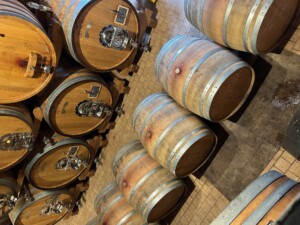
When racking takes place, the cellar is filled with vinous aromas and only partially accessible to tourists. Almost all the barrels are emptied and then refilled. This allows the sediment to be removed and the wines, which have been aging for a long time, to reach perfect clarity, allowing bottling without filtering. Filtering is decidedly traumatic for the wine, and for important wines, such as Brunello, it is best avoided. Racking also serves to change the type of barrel in which the wine ages. For this reason, all the barrels are tasted before the winter racking.
About twenty days after racking, you can already perceive the different imprint of the wood on the new wine. Tourists love smelling the wine in the wooden barrels, and my cellar staff detest this habit: “Please don’t uncork the barrels!” The sounds of the cellar are also fascinating. The wine gurgles, especially during the first year.
In the end, wine tourism in the cellar has its charm; try it.