








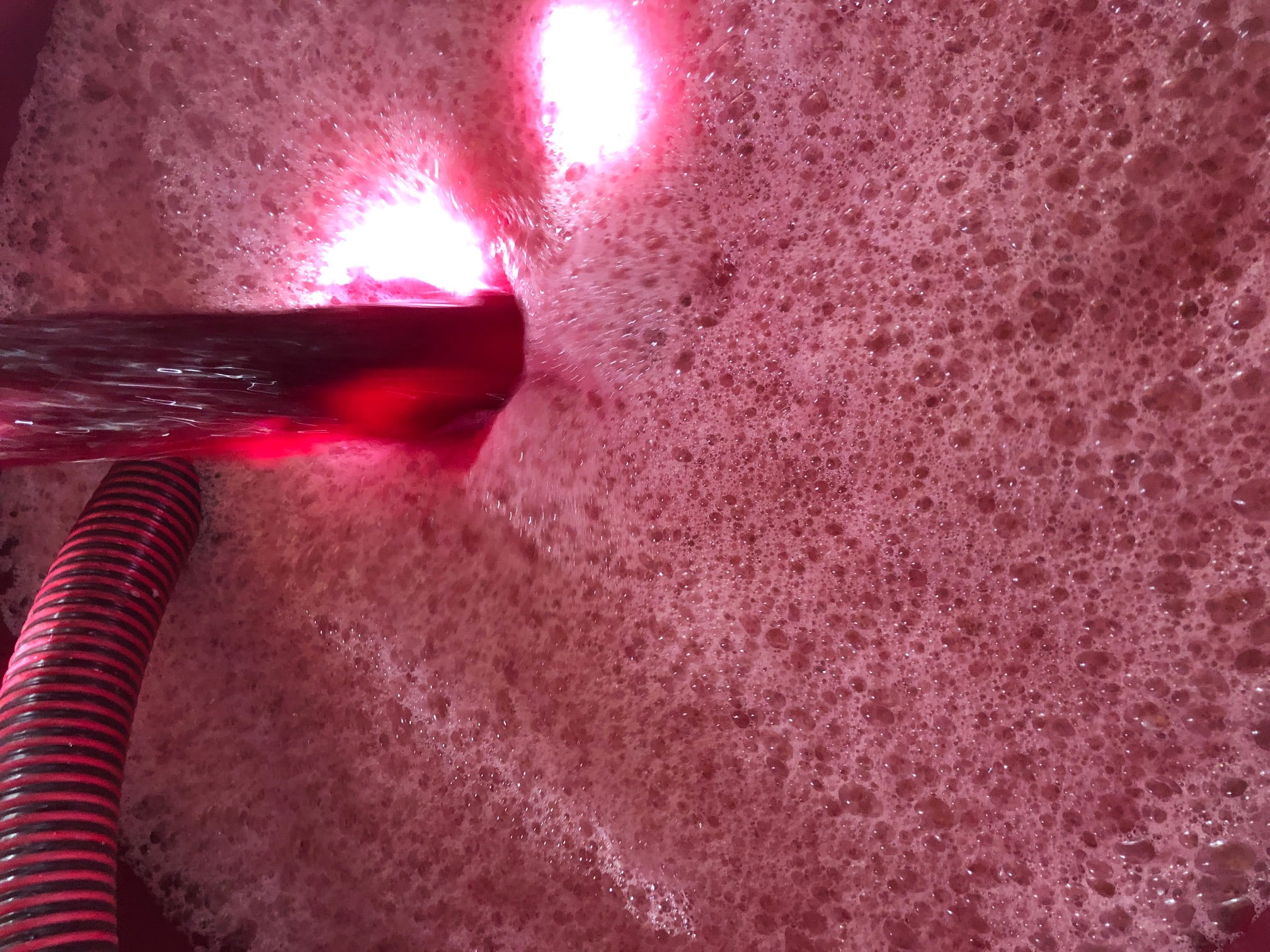
We must look at red wine with more attention
Red wine reveals many of its secrets upon visual inspection: alcohol content, consistency, freshness, age … are all evident to the naked eye before reaching the nose or mouth
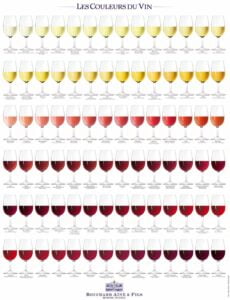
visual inspection of wine: colour
by Donatella Cinelli Colombini
Each of us during the Sommelier courses listened to the instructions regarding the visual inspection of the wine with a certain condescending air.
Do not deny it; it has happened to all of us.
To begin with it is the aroma and tastes that attract attention because they are a rediscovery of the senses, that for the past century we have all used very little. Our lifestyle and the structure of our brain privilege sight, while the use of the nose and tongue has progressively been reduced to a simple “I like it” or “I don’t like it”. The Sommelier course is often a way to rediscover aromas and tastes because slowly they become understandable messages.
SWIRLING THE WINE IN THE GLASS
For this reason the visual analysis is often underestimated whereas listening to people such as the World Champion Sommelier Luca Martini, it is easy to understand how important this is in understanding a wine. His first suggestion is to <<look at how the wine moves in the glass>> the slowness is typical in rich wines while the watery ones with no substance are much faster. Generally filtering worsens the situation.
The legs left on the inside of the glass once the wine has swirled tell us a lot especially the way they descend. More alcoholic components there are (ethanol, glycerol) closer together the legs will be.
COLOUR TONE AND INTENSITY

Red Wine: colour tone and intensity of the wine
Obviously the tone of colour is important as it reveals the status of the evolution and must be observed in the rim where it is easier to see the hues and the change in tones; younger reds show their acidity with a tight rim, mature wines show warmer tones in the rim, and then in time the arrival of garnet notes. The chromatic intensity on the other hand is well observed in the middle of the glass.
LIMPIDITY AND TRANSPARENCY ARE DIFFERENT CONCEPTS
Limpidity is also very important, as quite rightly mentioned by Leonardo Romanelli, and it is different to transparency. An abundance of colouring substances makes the wine very dark and hardly transparent. Another thing is the limpidity and where it is lacking it is a very negative sign. In the best hypothesis it indicates an excess of colouring substances that are not stable but it can also mean a turbid effect which always indicates bad craftsmanship in the cellar.
BRILLIANCE COUNTS MORE THAN INTENSITY
The colouring intensity does not indicate the quality of the wine. Pinot Noir or Sangiovese make wines that are more translucent but of great finesse.
Another element to look out for is the vibrancy, this is seen in the middle of the glass and is an indicator of vitality and freshness; a wine with low PH will always have a gleam.