








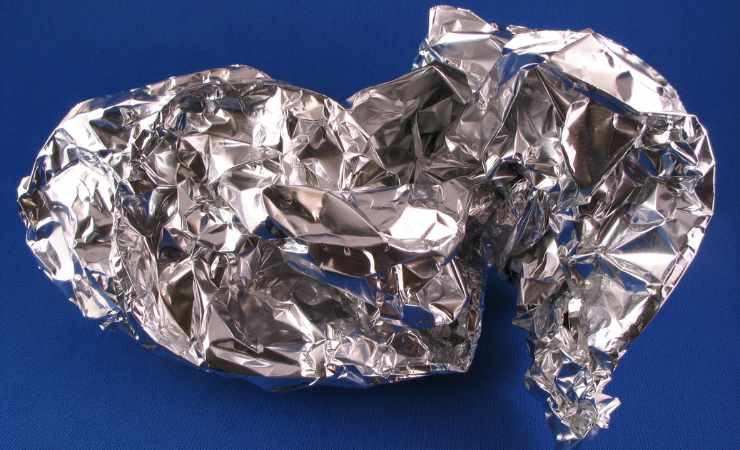
ALUMINIUM IN THE KITCHEN: BETTER NOT
WE HAVE KNOWN FOR YEARS THAT ALUMINUM PANS CAN RELEASE TOXIC COMPONENTS INTO FOOD BUT ALUMINIUM FOIL IS ALSO DANGEROUS WHEN COOKING AND IN CONTACT
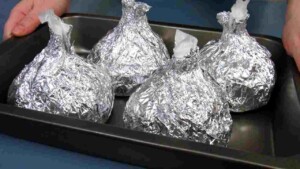
correct cooking method in the oven with baking paper in contact with food and foil on the outside
By Donatella Cinelli Colombini, winedestnation, Fattoria del Colle, Casato Prime Donne
I love super housewives more than starred chefs, but in this case, we can learn from them. They avoid contact between aluminium foil and food both in the oven and during storage because acids such as lemon or pickles could generate contamination. Check their recipes and you will see.
This is a valuable lesson that everyone should learn and bring into the kitchen. An article by Eugenio Marini in Gamberorosso Notizie goes into detail with plenty of examples.
ALUMINIUM IN COOKING AND IN CONTACT WITH ACIDIC FOODS CAN CONTAMINATE
Searching the Internet, alarming phrases come up. <<The EFSA (European Food Safety Authority) has established maximum limits for exposure to aluminium: a person who weighs 60 kilograms, for example, should not ingest more than 60 milligrams of aluminium per week>>. I wonder how to measure the 60 milligrams and therefore, as a precaution, it is better to remove aluminium from the kitchen.
The critical points, those in which the release of potentially toxic substances is greater, are cooking and contact with acids such as vinegar, tomato and lemon. Furthermore, using aluminium trays or aluminium foil as I have done, up until now, is absolutely wrong.
On the other front, that of those who consume, greater attention should be paid to pregnant women, people with kidney problems and children for whom toxicity can be a serious danger.
But the obvious thing, in all the articles, is the greater danger of aluminium foil compared to normal pots. <<If you choose aluminium, prefer pots and pans in solid aluminium rather than tin foil, especially for cooking acidic foods>>. In practice, baking paper should be placed between the aluminium foil and the food.
THERE IS NO RISK-FREE KITCHEN BUT RETURNING TO THE PANS OF THE PAST MAYBE WORTH IT
But it doesn’t end there: in the kitchen, contaminants can also come from the coatings of pans and non-stick ceramics… In the end, imitating the old housewives seems to be the safest way and Eugenio Marini’s article also concludes by stating << we should all reconsider some old cooking methods, with steel pots, earthenware (or terracotta) and Pyrex>> and surprisingly << good old copper>>.