








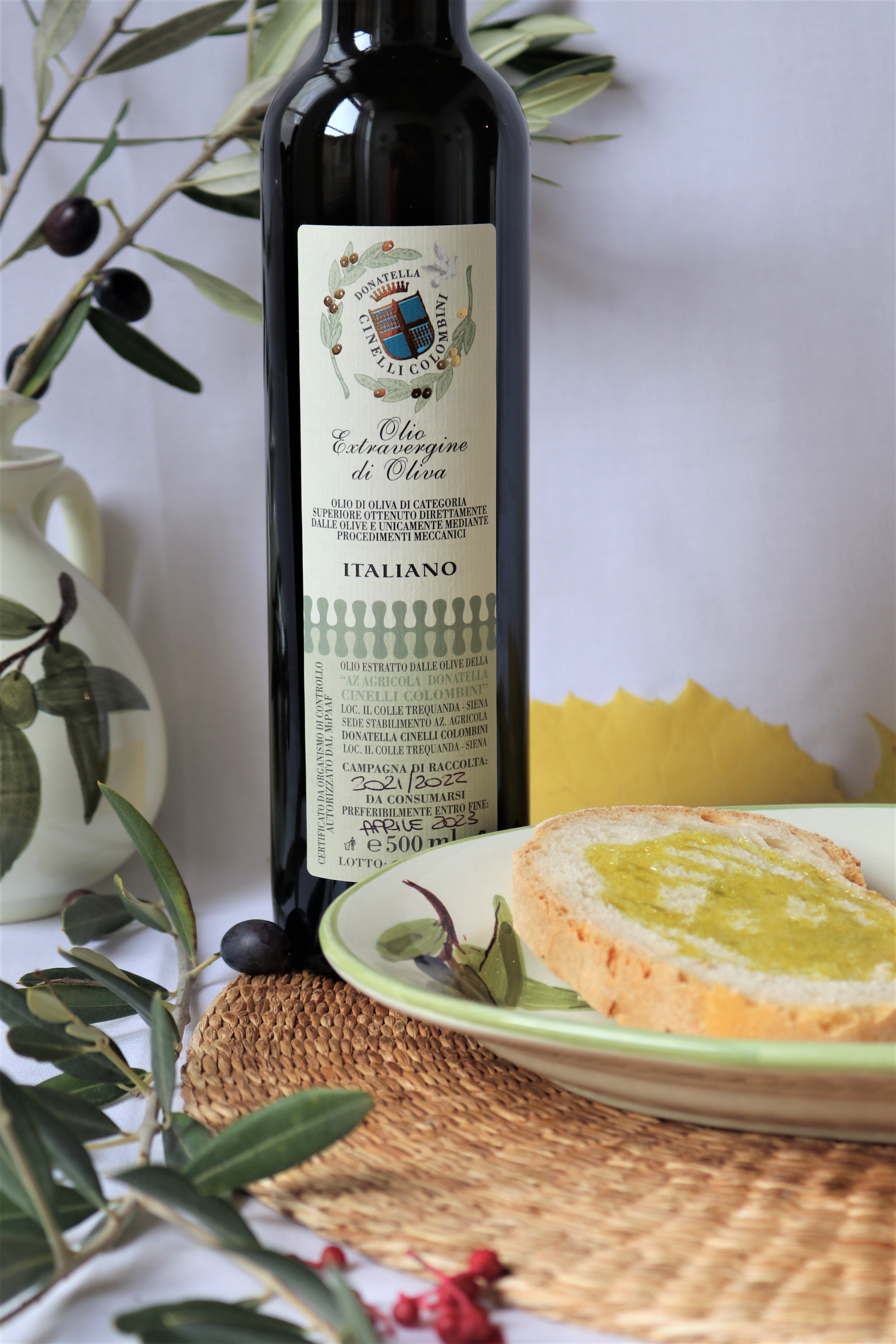
EXTRAVIRGIN OLIVE OIL: TRUE AND IMPORTED
ONLY 28% OF THE EXTRA VIRGIN OIL SOLD IN ITALY IS PRODUCED IN OUR COUNTRY. OUT OF 900 THOUSAND TONS OF CONSUMPTION AND EXPORT OF EVO OIL, 600 THOUSAND ARE IMPORTED
Only 28% of EVO oil consumed o exported from Italy is really Italian
By Donatella Cinelli Colombini, winedestination, Casato Prime Donne
The data on EVO oil are impressive and reveal a bleak panorama. On one side, the Apulian olive groves destroyed by Xylella and the hilly ones abandoned due to lack of manpower. On the other side, a market unwilling to pay remunerative prices for Italian extra virgin olive oil made to the highest standards while the shop shelves are full of low-priced extra virgin olive oil from intensive olive groves in foreign countries.
The RTO Telematic Oil Registers show a stock of 190 thousand tons consisting of 71% EVO oil which is increasingly less Italian.
The Italian EVO oil production crisis does not seem to be stopping: plant diseases, adverse climate, abandonment of olive groves… the reasons are numerous but the results are devastating.
OUR NATIONAL PRODUCTION OF EVO OIL IS 28% OF WHAT WE NEED
Even the Italian olive harvest last autumn marked a drop of 90 thousand tons compared to the previous year. The production deficit is increasingly marked: we produce barely 240 thousand tons, that is 28% of what we need. Every year we need 850-900 thousand tons of which 550 for domestic consumption and 350 thousand tons for export. For this reason, agri-food industrialists source from Tunisia, Spain, Greece and other countries. Puglia in the South and Umbria in the Center are the nerve centres of storage.
Another element to underline is the flop of the DOP-IGP, that is, the 50 protected geographical indications that concern only 5.8% of the total oil and 8.2% of the extra virgin. I myself can testify to my disappointing experience. Consumers do not know, do not ask for and are not willing to pay for the DOP-IGP label, so we producers are discouraged from engaging in the bureaucratic procedures and delays associated with the granting of state labels.
FLOP OF DOP-IGP EVO OIL
Even on organic oil there are <<doubts about the economic sustainability of this supply chain>> says GamberoRosso in its long article dedicated to the production crisis of extra virgin olive oil. In my little personal experience, however, the organic symbol is starting to be known and remunerated by consumers.
I have noticed that the Tuscany Region, as well as many local administrations have tried to counteract the decline in oil production by offering financing to the olive supply chain and especially to the mills. I think it is a good tactic even if the biggest problem remains the market. Large foreign imports at low prices are crushing the price lists to levels that do not allow to pay the production costs of traditional Italian olive groves. Unfortunately, the lack of knowledge of the organoleptic qualities of EVO oil by most consumers prevents them from choosing with knowledge and instead pushes them to evaluate the offer only based on price. Another element of regret concerns the catering industry that has made little effort to promote EVO oil.
RISK OF ABANDONMENT OF OLIVE GROVES
The risk of abandonment of historic olive groves is increasingly greater with the consequent damage to the landscape that follows. This is particularly worrying in areas such as Tuscany and specifically Trequanda, where the Fattoria del Colle is located. The municipality has obtained, thanks to its olive groves, registration in the “National Register of Rural Landscapes of Historical Interest”.
It should be remembered that oil tourism is taking its first steps successfully. The underground oil mills of Gallipoli are the most famous and visited destinations but also the Frantoio Buonamici in Fiesole shows how extra virgin olive oil can become an attraction on a par with wineries or art monuments. Moreover, the recent success of EVO oil in Japan, which went from 280 million euros in 2023 to around 307 million euros in just one year with an increase of +9.6%, really gives us hope. For this reason, there is no point in giving up in the face of declining production and increasingly aggressive foreign competition.