








Amphora yes amphora no, that is the dilemma
Amphora: how and why the smallest container for wine has come back into fashion. From the Archipelago Muratori the first analysis regarding terracotta wine jars
COS
Read for you by Donatella Cinelli Colombini
The meeting took place at the Tenuta Rubbia at Colle di Suvereto, on the Tuscan coast, with Professor Attilio Scienza from the Università di Milano as a real showman, with overwhelming enthusiasm

Suvereto return to clay
He is the “grape Sherlock Holmes” who for many years has investigated on the prehistoric origins of the vine and is now following the traces of its oldest containers. A return to the terracotta amphorae is for him a cultural action before being an oenological one, recuperating original knowledge and tastes << a way of contrasting wine being seen as a beverage with a stereotype and standardized taste, it is maybe a good idea to go back to old perfumes>> says the great Attilio. In fact , in Georgia where it is believed the vitis vinifera comes from, mother of all vines, wine is stored in amphorae (kvevri in Kakheti aand in Kartli ochuri in Imereti and in Racha), for the last 4.000 years.
So the diversity which seems to animate ever more so those who work with grapes, is not the main reason for the use of clay containers but there is also something more, practically nostalgia for an old type of simplicity and a return to manual things, without technology and a manual contact with the grapes that become wine. The idea comes then more from sociological factors than those from the wine world.

barricoccio
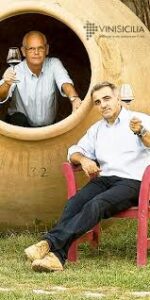
A feeling which unites experts, journalists and producers all present at the convention at Suvereto, and which transpires from the speeches made by Professor Attilio Scienza, by the wine maker Francesco Iacono from the Tenuta Rubbia al Colle in Suvereto, as in the passion of the Sicilian Giusto Occhipinti from COS and in the belief of Luciano Ferraro from Corriere della Sera and Alessandro Torcoli from Civiltà del Bere. Even a refined taster such as Luca Gardini – World Champion Sommelier 2010 – has understood the richness in this proposal.
<<Working with nature refines the ability to feel, it makes on participate with the spirit and the habits of the farmer, it helps to well understand the life-cycles. To the more concrete dimension of creation one puts together a different dimension which is more distant form the materialistic aspect and is enriched with a more spiritual dimension>> writes Elisabetta Foradori in her web site.

Elisabetta Foradori
But the dialogue with nature and the antique traditions tied to wine are not the only attraction there is also a winery full of terracotta barrels which seem an army. These are called “barricoccio” in the Tenuta Rubbia al Colle, on the Archipelago Muratori, where the wine that makes the “Etruscan style” relive ages.