




EXTRA VIRGIN OLIVE OIL FROM FATTORIA DEL COLLE (1)
INSTRUCTIONS FOR THOSE WHO LOVE EVO OIL AND WANT TO KNOW MORE ABOUT THE QUALITY, THE ORCIAIA PROJECT AND THE VARIETIES WE PRODUCE
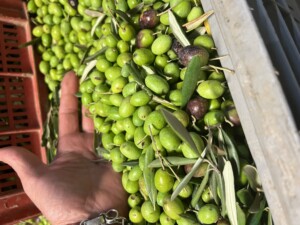
Correggiolo olives Toscana Fattoria del Colle
by Alessia Bianchi, Fattoria del Colle Trequanda, winedestination, Casato Prime Donne Montalcino, Donatella Cinelli Colombini
What determines the quality of extra virgin olive oil? It depends almost equally on nature and man. The terroir (soil and microclimate) determines the quality of the oil by 50%, the cultivar (i.e., its cultivation and harvesting method) by 25%, and finally, the mill and storage methods by 25%.
The Trequanda area and its olive oil production have been among the most renowned and appreciated for centuries. It is a small territory with abundant calcareous soils, its altitude is over 400 meters, its climate is breezy, and its distance from the sea means olive fly rarely reaches it. This area is particularly suited to olive cultivation, and the oil produced here is of the highest quality. Our production is entirely organic. Fattoria del Colle has 6 hectares of olive groves with approximately 1,600 trees grown in VASE (vase-trained). The olive varieties are Frantoio-Correggiolo, Moraiolo, and a few Olivastra.
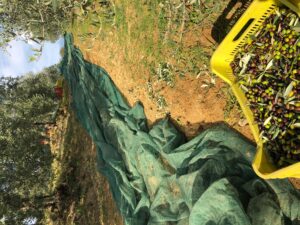
The olives are hand-picked in October and November while still green. They are then stored in perforated crates and transported to nearby mills. Since 2025, we have been researching and differentiating the pressing process at three different mills in the area, with the aim of increasing the quality and accentuating the oil’s distinctive characteristics
FATTORIA DEL COLLE ORCIAIA PROJECT
The new oil storage room was created inside two wine vats from the early 20th century. Here we placed the ancient terracotta jars produced in Petroio, a few kilometres from Fattoria del Colle, a few centuries ago. The project involves returning to storing oil in the ancient terracotta jars, as was historically done in our countryside. Some of them have already been restored. The work was long and complicated because it involved both the internal lining and the connection to the nitrogen distribution system to preserve the quality of the oil. In fact, the oil must be stored in washable containers and without contact with oxygen to prevent oxidation.