








EXTRA VIRGIN OLIVE OIL: TASTING AND STORAGE
WHICH ARE THE FLAVOURS AND TYPES OF THE BEST EXTRA VIRGIN OLIVE OIL AND HOW TO TASTE IT. THE OLIVE GROVES AND OIL AT FATTORIA DEL COLLE IN TREQUANDA IN TUSCANY
olio extravergine di olia Fattoria del Colle Trequanda
by Alessia Bianchi, Fattoria del Colle, Casato Prime Donne
Visual analysis of extra virgin olive oil is considered of little relevance, which is why professional tasting glasses are deliberately coloured to mask visual characteristics that could influence the taster’s judgment. The shades of oil can range from yellow to intense green, but are linked to the variety of olive or the degree of ripeness. On the other hand the olfactory analysis is of considerable importance for the final judgement. The aroma perceived by inhaling, after having warmed the glass between the palms of the hands to bring it to the optimal temperature of 28°C, immediately reveals whether the aromas are pleasant or whether there are unpleasant sensations linked to defects.
A quality extra virgin olive oil must have a fresh and vegetal aroma, which can recall hints of artichoke, almond or tomato. The intense aroma is a distinctive characteristic of high quality oils and represents one of the main differences between a common extra virgin olive oil and an excellent product.
HOW TO TASTE OLIVE OIL
The taste analysis will allow you to describe the tactile stimuli such as fluidity, consistency and oiliness, and the gustatory ones (sweet, bitter, spicy)
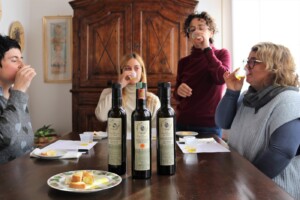
Olive oil tasting at Fattoria del Colle
There are three positive attributes
- Fruity – It can be light, medium or intense, depending on the intensity of the perceived olive aroma. It depends on the variety of the olive, but also on the degree of ripeness
- Bitter – Typical sensation of oils obtained from green olives and also linked to the variety
- Pungent – Pungent tactile sensation characteristic of oils produced from olives that are still green
Fruitiness levels:
- Light Fruity – Delicate taste, with sweet notes.
- Medium Fruity – Balance between bitter and spicy.
- Intense Fruity – Richer in antioxidants, with a strong and persistent flavour.
The choice of one oil or another depends a lot on the pairing with food, just like with wine. A white meat will go better with a light fruity oil, while a soup or grilled meat will be more enhanced by an intense fruity one
EXTRA VIRGIN OLIVE OIL FROM FATTORIA DEL COLLE IN TREQUANDA
Frantoio Oliviera Sant’Angelo in Castelmuzio
The Trequanda area is particularly suited to the production of EVO oil, thanks to its calcareous soil, altitude above 400 meters and a breezy climate that keeps the olive fly away.
At Fattoria del Colle we cultivate 6 hectares of olive groves with approximately 1,600 plants of the Frantoio, Correggiolo, Moraiolo, Leccino, Pendolino and Olivastra varieties. The olives are harvested by hand in the months of October and November, when the olives are still green.
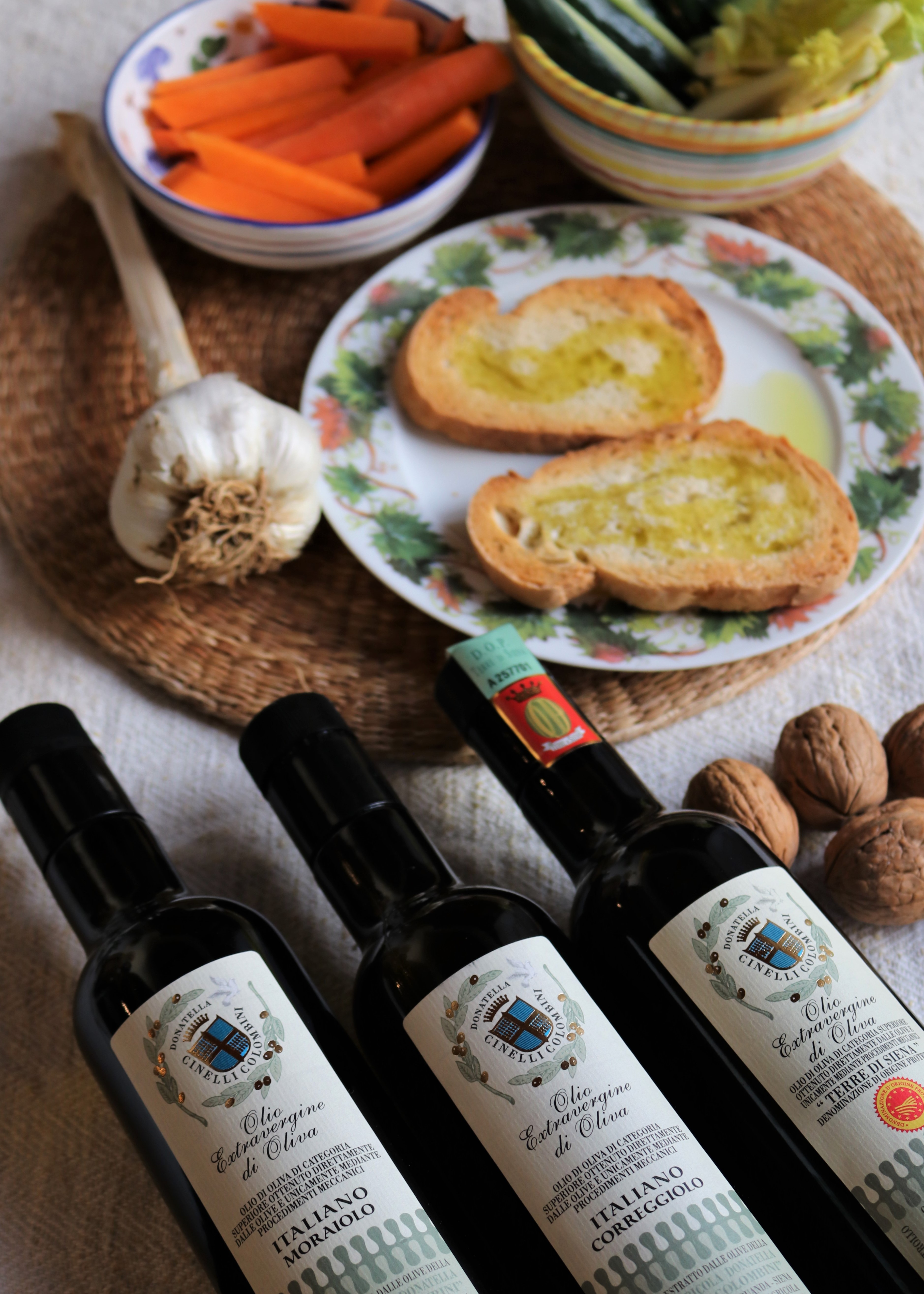
The pressing takes place in the Frantoio Oliviera Sant’Angelo in Castelmuzio, which uses a continuous cold extraction system, with a controlled temperature below 26°C, certified for IGP, DOP and ORGANIC production. Three types of EVO oil are produced, the monocultivar Correggiolo which has an intense artichoke aroma, and has a strong, full and spicy taste, the monocultivar Moraiolo which is more delicate and gentler but has a more bitter aftertaste, and the DOP TERRE DI SIENA with a harmonious taste with a good balance between fruity, bitter and spicy.
HOW TO STORE EXTRA VIRGIN OIL
EVO oil should be kept in a cool, dry place, away from heat sources, possibly in environments where there are no excessive temperature variations. An optimal temperature for storing oil is between 14° and 18°.
To preserve the characteristics and quality of EVO oil, we store it under nitrogen, this allows us to schedule small bottlings during the year. However, the most important project at Fattoria del Colle is the new orciaia that was created inside two cement wine vats from the early twentieth century. Here have been placed the terracotta jars produced in Petroio, a few kilometres from Fattoria del Colle, a few centuries ago. Some of them have already been restored. The project involves returning the oil to the ancient terracotta jars that will be hermetically sealed with a special closure created specifically for this purpose, and the oil will be placed under nitrogen.