








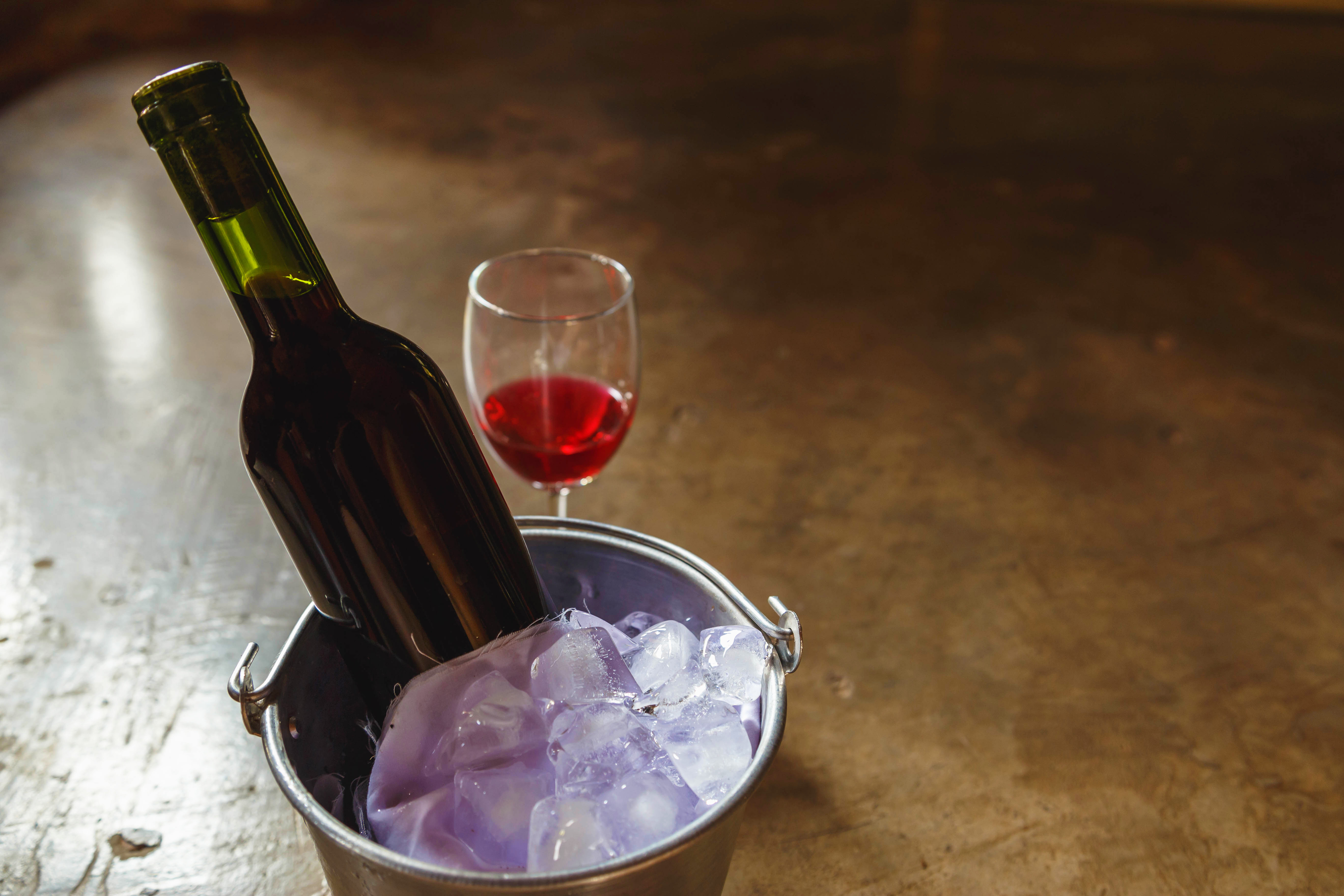
RED WINE SERVED CHILLED IS BETTER
I ONCE SERVED MY BRUNELLO AT THE TEMPERATURE OF A HOT BROTH, AND I WAS MORTIFIED. YOU NEED TO USE AND ICE BUCKET FOR REDS TOO

Tormaresca Antinori -fichimori- red wine to be served chilled
by Donatella Cinelli Colombini, winedestination, Fattoria del Colle Trequanda, Casato Prime Donne Montalcino
Until a few years ago, the problem for us Brunello producers was bottles getting too cold in winter; however, global warming has reversed the situation. Now, the focus is on cooling the wine, as no one wants to serve it at a temperature that makes it resemble herbal tea. That is why using ice buckets—a practice once reserved for whites and rosés—has become common for reds as well. And I am not referring only to young wines that emphasize freshness, but also to great reds meant for aging.
RENOWNED SOMMELIERS AND WINEMAKERS ALIKE AGREE ON THE PRACTICE OF CHILLING WINES
A delightful article by WineNews discusses this trend, featuring insights from prestigious sommeliers such as Paolo Porfidio (Excelsior Hotel Gallia, Milan), Sebastien Ferrara (Enrico Bartolini al Mudec, Milan), and Marco Reitano (La Pergola by Heinz Beck, Rome).
For instance, a Barolo or Brunello might be served at a “winter” temperature of around 17°C, whereas in summer, this can be lowered to 14°C. The wine becomes fresher and more drinkable, the alcohol is less perceptible, and the wine’s quality shines through more effectively. Winemakers also welcome this trend, which returns wine to “cellar temperature.” The only downside concerns wines with aggressive tannins; these can feel astringent at room temperature but become almost undrinkable when chilled.
WINES MADE TO BE CHILLED
The practice of chilling red wines has become so widespread that it has given rise to a specific category known as “chillable reds.” In Italy, examples include Antinori’s Fichimori (from Tormaresca), Masi’s Fresco line—featuring a Rosso Verona IGT in a lightweight, designer bottle—and Braida’s frizzante Barbera del Monferrato DOC. The key characteristics of these new-generation red wines are vibrant freshness, a rich aromatic profile, moderate alcohol levels, and delicate tannins—qualities that are enhanced by serving the wine chilled.
While certain grape varieties—such as Bonarda and Frappato—are particularly well-suited to this style, no variety is excluded from the trend, not even Sangiovese; the Californian winery Field Recordings produces “Freddo,” a 100% Sangiovese bottled in clear glass and designed to be enjoyed chilled during the summer.