








ARE WINE SCORES STILL USEFUL?
THE ANSWER IS YES, BUT THEY ARE NOT ENOUGH IN AN ERA WHERE CONSUMERS SEEK IN WINE, AS IN EVERYTHING THEY BUY, A REPRESENTATION OF THEMSELVES AND THEIR VALUES.

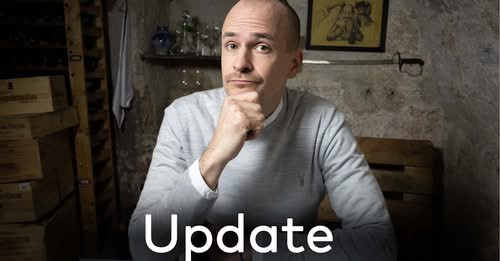
Kostantin Baum MW wine scores
By Donatella Cinelli Colombini, winedestination, Fattoria del Colle Trequanda, Casato Prime Donne Montalcino
Today, critics are no longer the only ones who pass judgment on wines; there are sommeliers, wine educators, influencers, retailers, algorithms, and ordinary consumers who post their opinions on portals. Furthermore, many consumers, especially young ones, prioritize values such as sustainability, authenticity, and wine’s ability to narrate a story rather than “quality.” This is an abstract concept that perhaps less closely aligns with their need to represent themselves through what they eat, what they wear, or the style of their place of residence.
For this reason, “the authority once placed in a single score appears increasingly unstable,” writes Konstantin Baum, Germany’s youngest Master of Wine. The notes below are largely taken from his WineSearcher article, which I encourage you to read.
THE BIRTH AND INFLUENCE OF WINE SCORES
In this evolving landscape, the value of wine scores is also changing.
The success of the scores out of one hundred lies in its simplicity. The numbers are quick to understand and reduce the complexity of wine—regions, grape varieties, appellations, vintages—to something simple that needs no explanation and helps consumers avoid making mistakes in their choices. This need has become even more important with the advent of e-commerce. For years, the score has heavily influenced the market, both the price and the commercial prospects of wines: the so-called “Parker effect,” whereby a very high rating from the Wine Advocate was enough to transform an unknown producer into a creator of collectors’ wines. A prime example is Screaming Eagle.
WHERE SCORES ARE STILL FUNDAMENTAL FOR WINES ACCORDING TO BAUM
In fact, “collectors and investors have adopted scores as risk management tools. A circular mechanism between scores and market trends, the key being trust in competent and impartial critics.” Gradually, the influence of the major specialized press also shaped taste and directed producers in the cellar. Critics’ taste became a judgment of quality, so wines that conformed to the dominant style in the press received high scores, while others were marginalized. A vicious circle between critics and the market that pushed global production toward standardization.
Today, “wine scores have not disappeared, but their relevance has changed. They remain important in some contexts and much less influential in others.” For fine wines, i.e., investment wines, and at En Primeur auctions, scores remain crucial because they drive financial speculation. Wine competitions are based on blind tastings that presuppose adherence to a single quality scale. Even commodity wines, those priced lowest in supermarkets, are promoted using scores from specialized magazines.
YOUNG CONSUMERS’ NEW CHOICE CRITERIA
In general, ratings retain their appeal, especially among adult drinkers. Young people base their choices on multiple sources, similar to their choice of restaurants, and seek to discover their own tastes. They apply their values regarding the environment, authenticity, and the ability to represent a culture and a region to their wine choices. Young people use different tools and criteria than critics.
Overall, consumers no longer have a single criterion for judgment, and “a single number struggles to capture what matters most”. Also because there is no single scale of values: there are more generous critics and others who keep the numbers low, so that their 92 corresponds to a 95 assigned by a colleague. Instead, the market puts all these ratings on the same level.
TOO MANY SCORES ABOVE 90/100 HAVE CAUSED EXCELLENCE TO LOSE ITS COMMUNICATIVE POWER SAYS BAUM
Currently, the shelves are full of bottles with scores above 90/100, and when “almost everything is excellent, excellence loses its communicative power.” Konstantin Baum analysed the scores of Jancis Robinson, Robert Parker, James Suckling, and Vinous published in 2023. He found that none of them use the full range, but all are concentrated between 86 and 94/100.
SEARCH FOR A NEW WAY TO COMMUNICATE VALUE JUDGMENTS
According to Baum, the importance of scores remains, but they must be accompanied by information that clarifies the style of the wine and the context in which it is tasted, even using video. His opinion is based on the greater expertise of critics compared to that of ordinary consumers. I agree with the need to distinguish the judgments of “experts” from those of “inexperienced” drinkers. No one would equate the judgments of a doctor and a florist regarding their health. But it remains difficult to understand, on a numerical scale, the values that consumers seek in wine as well as in fashion, painting, music, film, design… These are different aromas, flavours, and messages. A visual transposition similar to music on a musical staff, where different sounds are not aligned, would be needed. Unfortunately, it’s difficult to understand how something like this could be achieved.
Fabio Rizzari agrees: “Tastes change, criteria change, reference values change, but within a certain shared horizon, it remains reasonable to say that some preparations are more successful, “intense,” and meaningful than others. The problem of minor wines is therefore not solved by abolishing the best, the worst, and intermediate levels, but by clarifying the criteria, and with what critical responsibility, those judgments are based.”