







Less restaurants and more pharmacies, this seemed a “boutade” by the “La Revue du Vin de France“ instead it really has been proven by a Spanish survey regarding wine and depression

Mario Soldati at the restaurant
Read for you by Donatella Cinelli Colombini
Small amounts of wine daily prevent depression, anxiety and stress. This is the result of a survey by the Navarra University in Pamplona published by “BMC Medicine journal”. The surveys lasted 7 years on a sample of 5500 people between 55 and 80 years of age, regarded also the Mediterranean diet with a specific reference to oil. Martinez-Gonzalez director of the studies reached the conclusion that “a moderate consumption can reduce the incidence of depression while heavy drinkers have a higher risk”. To drink 2 to 7 glasses of wine per week, spread through the week, it seems reduces the probability of suffering from depression. The illness at present because of the economic situation al round is increasing incredibly fast.
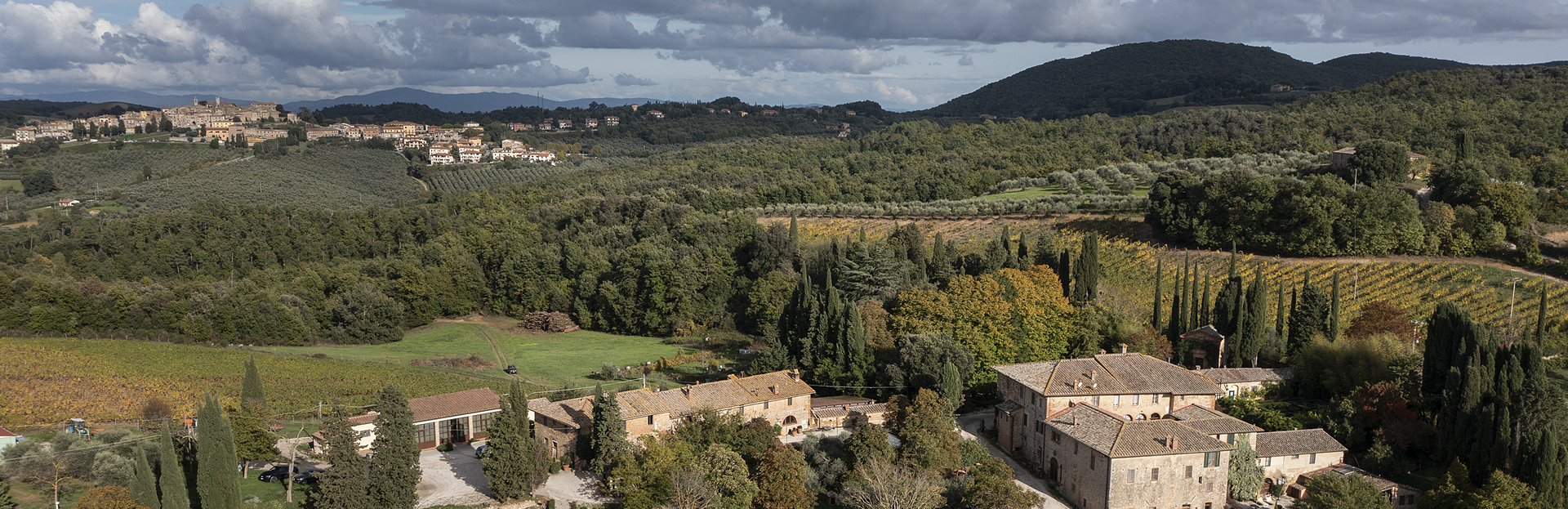
During the long All Saints bank holiday, at Fattoria del Colle, end of harvest party with dancing among the barrels, Halloween and extra virgin olive oil dinners, tastings and tours.

Fattoria del Colle dinner with Russian importers
A very long weekend full of activities, surprises and parties, are what Fattoria del Colle proposes at the end of October. Tastings of the Brunello just born and the new oil, 3 themed dinners with menus full of surprises and great wines, guided tour of two wineries and tastings of important wines.
In the Tuscan countryside still uncontaminated, coloured with the autumn colours, a weekend able to regenerate you in spirit and in the body, it will teach you much about wine and the typical cuisine, but you will also make plenty of new friends. Because other than tours of the wineries, tastings, cookery lessons there will be dinners, dances and games. In other words a countryside atmosphere like long ago which will really make you feel that you are in Tuscany.
€ 52,00 per night, per person, stays in double room with breakfast
All the activities in the program are free excluding the meals which are priced one by one
The American Wine Consumer Coalition defends the rights of wine lovers, if necessary even with attorneys and has now published ratings for the various States.
Read for you by Donatella Cinelli Colombini

Houston after Brunello seminary
The list of US States which most love wines resembles the Moody’s ratings for finance: A+, A, A- and so on, right to the bottom with the worst ratings of D, D- and F.
The criteria for the evaluations come from a survey regarding the consumers needs, which in order are; to receive wine from the wineries, no government monopoly, possibility of receiving wine from stores, to be able to buy wine on Sundays, to be able to take ones wine to restaurants, to be able to buy wine in food stores
This list makes one smile in Italy where these things are all permitted, but in the homeland of prohibition, not everything is permitted quite the contrary!
They call it lower alcohol wine and the British want to name it wine at a European level against France, Italy and Portugal
Read for you by Donatella Cinelli Colombini

Lower alcohol wine
A very interesting article by Alice Green published in the “Corriere vincolo” talks about, with great detail, the English strategy regarding the “vinello”. The British Health minister Earl Howe has promoted a political action also regarding other European countries so as to be able to name wine also less alcoholic beverages. At present wine must have at least 8,5% vol, but for Howe this minimum level can be reduced to 4,5. The British authorities are in fact convinced that the “lighter wines” are an excellent weapon against alcoholism and for this reason they apply lower taxes to those grape drinks that have less than 5, 5% in alcohol. A tax reduction which Australia also wants to adopt in the future, which should make the tax value increase as the alcohol vol increases.
Golden wedding anniversary for Antonietta and Alessandro Francois with an unexpected thunderstorm which forced the party to be moved from the park to the halls inside Castello di Querceto
Seen for you by Donatella Cinelli Colombini

Alessandro-Francois-with-Fopre-and-Pellucci
It is very difficult to find a couple who get on so well in life and in work. Antonietta and Alessandro Francois, married 50 years ago, have celebrated their love as if it were the first day. Castello di Querceto unfortunately is under a heavy rainfall which forces a change in the programming of the party. What a shame!!! Even under the rain though the park with its lakes, the centenary cedar woods and the lights appear like a fairytale location. Luckily the Castello di Querceto halls are an authentic museum and Antonietta’s special touch has made them comfortable and welcoming.
It began with Traminer and will continue with the Brunello Sangiovese, Chianti and Orcia which will be picked after the 20th of September, if the deer don’t get to them and eat them sooner
By Donatella Cinelli Colombini

sangiovese-2013
Seeing the quantity of grapes eaten by wild boar, deer and roe-deer it comes natural to ask oneself if Tuscan grape growers cultivate grapes as animal nourishment rather than for wine. What a disaster! Year after year the problem is always worse and reduces the yield by 10-20%. It is surprising how a region like Tuscany, where wine is an important part of the economy and the employment, has n administration who is not sensitive to this problem and who dies not try to balance the number of wild animals with respect to the dimension of the woods.
Let’s change subject!
The Traminer harvest began on September 9th and lasted one and a half days-it is destined for the production of passito – my husband Carlo’s passion – and the white IGT “Sanchimento”. The grapes were refrigerated so as to reach the fermentation vats in excellent conditions.
Children force their parents toward environmental choices, the Millennials leave supermarkets empty, and they avoid large brands and wine shopping return to the winery of origin
Read for you by Donatella Cinelli Colombini

Millennials
When 3 years old a child begins to ask for things, at 4 he is able to get what he wants. In an era of great economical crisis the ability of young children to influence their parent’s choices recedes in front of the necessity to save money. However it is the younger generations which push their families towards more ecological choices, such as km 0 and in the end this influences wine shopping too. But the real change regards the Millennials. A study carried out by Jefferies and Alix Partners has revealed that the generation born after 1980, has adopted a different style of consumption compare to previous generations. In other words after years of shopping in supermarkets and the dominance of brand names now things have changed. There is more attention toward the environment and health, continuous use of the web and shopping done in the countryside or in a biological store that sells only goods made in the area. The big brand name is considered only when there is a promotion or a phone recharge.
Riccardo Tesi –Banditaliana- to understand how Tuscan folklore can meet Jazz and the songs by the singer-songwriters De Andrè, Vanoni, Fossati and give us emotions
Seen for you by Donatella Cinelli Colombini
Riccardo Tesi Premio Civiltà contadina 2013
Did you know that the Romans’ wine was only white? Did you know that the diatonic organ was an ancestor of the accordion? This is what I have learnt on a warm summer evening in Montalcino.
The “Centro studi delle campagne e del lavoro contadino” concludes the Montalcino august with a cultural appointment which surprises and gets more interesting as the years go by. The seminary lasts one week, unites the universities of Bologna, Firenze, Siena and of the Tuscia and this year was dedicated to the history of the countryside. What a wonderful title!
The award “Storia agraria” 2013 went to Gianfranco Pasquali among other things has studied wine. <<Up until the 13th century the important wine was only white, just as in the Roman era. The grapes were first pressed and then allowed to ferment>> explained the eminent historian <<The farmers on the other hand used to ferment the red grapes with the skins so as to obtain first the wine and then the “vinello” letting the skins ferment again with water. Only in the 13th-14th century did the red wines get vinified tank to the discovery of the procedure which allowed more pleasant red wines to be made>>.I think that they had understood how to remove some of the stems before vinification and so they obtained wines that were less tannic and aggressive.
