








WHAT TOURISTS DON’T EXPECT AT FATTORIA DEL COLLE (1)
THE SECRET ROOMS AT FATTORIA DEL COLLE WINERY AND THE STORY OF THEIR SURPRISING DISCOVERY. WHY THIS IS A UNIQUE PLACE WHERE HISTORY BECOMES WINE
Toscana Vin Santo Fattoria_del_Colle_vinsantaia
By Donatella Cinelli Colombini, winedestination, Fattoria del Colle Trequanda, Casato Prime Donne Montalcino
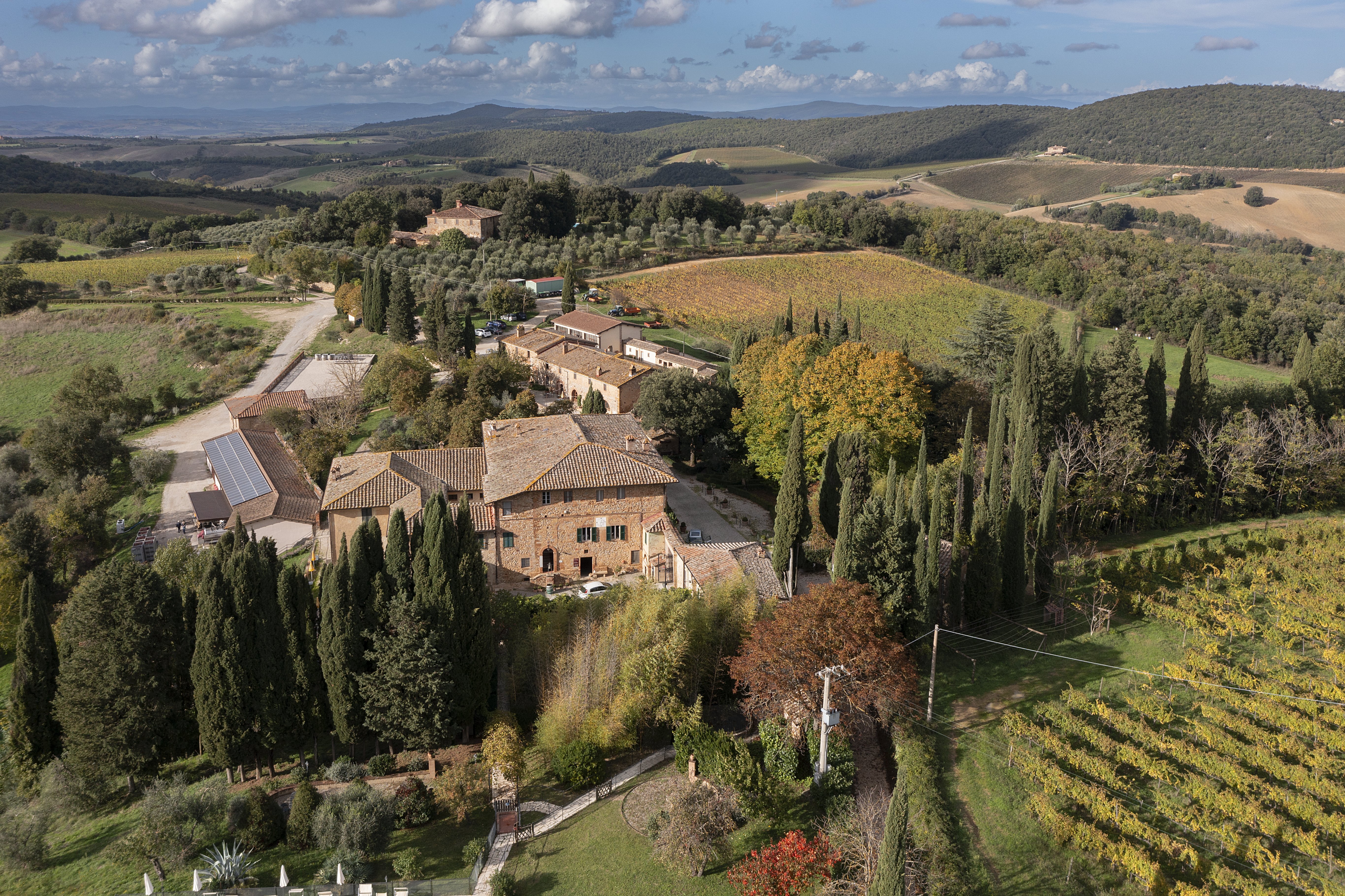
First-time visitors to Fattoria del Colle often say, “It’s beautiful here—I wasn’t expecting this.” They are delighted to find themselves in a genuine, significant place that is nonetheless unpretentious and welcoming. It is a unique setting that moves them, allowing them to experience the Tuscan countryside in all its simplicity as well as its extraordinary, historic beauty.
Yet we are amazed by their amazement. All our communication is completely authentic; we take photos or videos almost every day, and our social media followers see exactly what is going on—without filters, without staging, and without even rearranging objects or furniture. That is simply who we are, and yet tourists are surprised when they arrive. Perhaps we don’t know how to take photos. Or maybe the habit of presenting an idealized image online—better than reality—is so widespread that encountering people like us, who show themselves exactly as they are, comes as a surprise.
MANY SMALL SURPRISES AT FATTORIA DEL COLLE
Many people expect Fattoria del Colle to be smaller, but it is actually like a small country hamlet. Some international visitors—especially those referred by agencies—assume the word “fattoria” (farm) implies the presence of chicken or pig farming. Most expect a far more rustic setting where residents spend their days in bucolic idleness. “If only!” we reply, thinking of our days spent in front of the computer and the frantic pace of deadlines and emails in English. In reality, Fattoria del Colle boasts an aristocratic character and over 400 years of history. This is evident in the villa—with its historic rooms open to visitors—the chapel, and the grounds, as well as in its excellent tourism facilities: a restaurant, a banquet and meeting hall, a cooking school, a natural wellness area, three swimming pools, and a tennis court. The atmosphere is informal and relaxed, designed to rejuvenate guests who arrive feeling stressed. Yet, for all that, Fattoria del Colle is by no means lacking in artistic masterpieces or a noble heritage!
I won’t reveal all the secrets here, because visitors should find something unexpected; instead, I’ll tell you about the cellar’s most mysterious rooms.
THE SECRET ROOMS IN THE FATTORIA DEL COLLE CELLAR
Beneath the villa—where the barrels holding the maturing Cenerentola DOC Orcia and the Super Tuscan Il Drago e le 8 Colombe are kept—lie three rooms that were discovered during the restoration and that had remained hidden for centuries
One of these is the Hermitage of San Egidio di Querciola, a site also used by Saint Bernardino of Siena. Twenty-five years ago, the entrance to this underground space was covered with wooden planks, and the interior was filled with earth. For a few days, Donatella Cinelli Colombini hoped to discover a treasure there, but—alas—there was no sign of a cauldron filled with gold coins. Today, it serves as a secure vault for storing vintage bottles of Brunello dating from 1993 onwards.
The tunnel-like room that now houses the “caratelli”—small wooden casks used for Vin Santo—also came to light by chance. Builders were trying to reach the attic space where, according to ancient tradition, small barrels of Tuscan dessert wine are kept. Unexpectedly, while demolishing a floor, they uncovered a room situated at an intermediate level. Ascending a staircase made of iron and travertine allows one to enter the space and view the “caratelli” as well as the incredible brick vault, which is only a few centimetres thick at its centre. Today, designing such a vault would require an engineer and a complex system of calculations.
Finally, there is the bathtub room. It is located next to the small space that once served as the donkey stable and now houses the commemorative bottles from the Casato Prime Donne Award. This room, too, was discovered by chance while investigating the source of dampness on the wall. It may have originally been a grain silo or a well, but today it holds three bathtubs belonging to Count Spannocchi. Presumably, this noble landowner suffered from a skin condition that required him to spend many hours in the water and caused him to lose his hair. This explains the vast number of wig stands found in the attics and now displayed beside the bathtubs. We believe this illness was the root cause of Spannocchi’s financial ruin. Yet, it was precisely because of this unfortunate turn of events that Donatella’s great-grandfather, Livio Socini, was able to repurchase Fattoria del Colle—an estate originally built by his ancestors three centuries earlier.