





DONATELLA BEGINS WORKING AT FATTORIA DEI BARBI
PECORINO CHEESE, CURED MEATS, HOSPITALITY AND PUBLIC RELATIONS – THIS IS HOW DONATELLA’S PROFESSIONAL CAREER BEGAN, A TIME DURING WHICH SHE ALSO BECAME MOTHER WITH THE ARRIVAL OF VIOLANTE
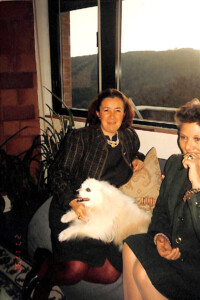
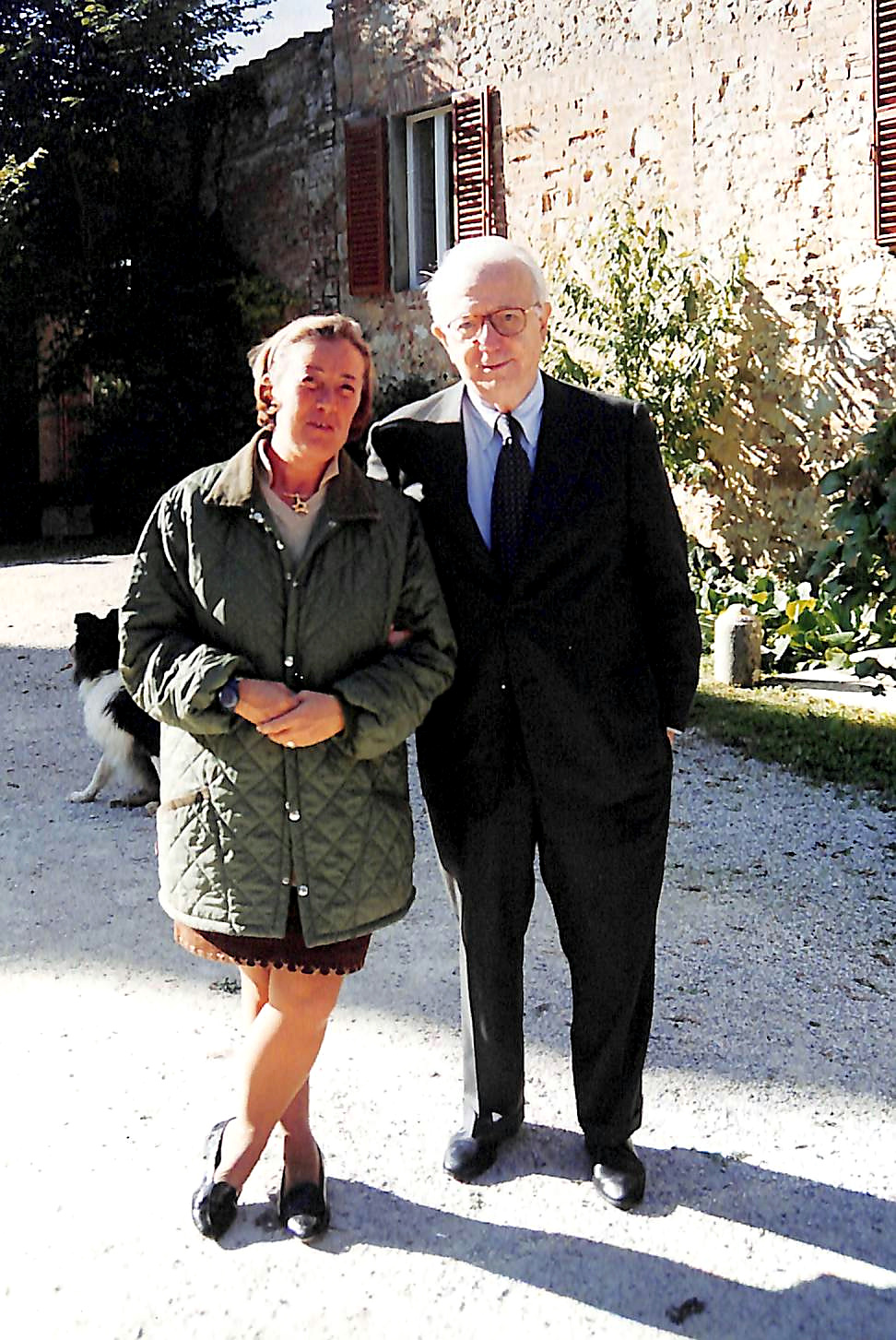
Donatella at Fattoria dei Barbi
By Donatella Cinelli Colombini, winedestination, Fattoria del Colle Trequanda, Casato Prime Donne Montalcino
DONATELLA BEGINS WORKING AT FATTORIA DEI BARBI
Tired of playing the role of the supportive wife and doing the cooking, I decided to ask my mother, Francesca, if I could work for the family business; she assigned me the task of managing the dairy, the cured meats production, the restaurant, inbound tourism, and media relations.
Meanwhile, our daughter Violante was on the way. There hadn’t really been a conscious decision to have a baby, either. My husband, Carlo, kept putting it off because he didn’t want to change our life as a couple, but then we went to Mexico; I caught “Montezuma’s Revenge”—traveller’s diarrhoea—which shifted my cycle, and I ended up pregnant. After a perfect pregnancy, Violante was born in the small hospital in Montalcino. She is the only member of the family born in the land of Brunello.
I arrived at the hospital at eight o’clock, and half an hour later, Violante was born. While most newborns are wrinkled, she was so beautiful she looked almost unreal. At first, she just ate and slept, but then our nights became a nightmare. When she finally slept for eight hours straight at the age of two, Carlo and I rushed to her crib to see what had happened. It was an experience that sealed our decision to let her remain an only child.
BOCCACCIO’S HOUSE IN FLORENCE
In the meantime, Carlo had been transferred to Prato, then to Rome, and finally to Florence. We lived in the house that, in the mid-14th century, had belonged to the family of Giovanni Boccaccio—the author of the “Decameron”, who set his tale “Ninfale Fiesolano” there. It is the house in the hills of Fiesole where I myself grew up. My grandfather, Giovanni Colombini, purchased it around 1950 from the heirs of an English bishop; they had refused to set foot in Italy for fear of the Communists and sold the property sight unseen, complete with all its furnishings. Now, Violante lives there with her husband Enrico and their son Lorenzo.
EARLY CAREER STEPS AT FATTORIA DEI BARBI
My work at the family estate, Fattoria dei Barbi, had its ups and downs. I excelled at public relations. At the time, few wineries maintained regular contact with newspaper editorial offices, organized events, or distributed press releases. This allowed even an amateur like me to stand out, and the resulting press coverage was phenomenal.
For the Taverna dei Barbi restaurant, I began compiling a collection of Montalcino recipes into three booklets titled “Beccamorti e buongustai” (“Gravediggers and Gourmets”)—the first word referring to the nickname given to the people of Montalcino after the Battle of Monteaperti in 1260. This, too, was a pioneering initiative. And to think I am not much of a cook; yet, the recipes I transcribed became a booklet titled “ 66 ricette di cucina montalcinese” (“66 Montalcino Recipes”), which is still on sale today.
PECORINO CHEESE AND THE ANCIENT SHEPHERDS OF LAZIO
I achieved my greatest results in cheesemaking. I loved making Pecorino, plunging my hands into the curd and pressing it into the moulds. It was an action performed by thousands of generations before me, as cheese is one of the oldest processed foods—dating back at least 8,000 years. Here, too, I managed to make a unique contribution. While touring the Lazio countryside, I noticed that the caves used to store the cheese didn’t have solid doors, but rather gates. I wondered why, as it seemed like an open invitation to cheese-hungry mice. However, upon reading cheesemaking manuals, I discovered that temperature fluctuations actually promoted the maturation of casein and the development of flavours.
DONATELLA EMULATES THE CHEESE MAKERS FROM LAZIO AT FATTORIA DEI BARBI
So, I decided to emulate the ancients. I had ventilation shafts with fans installed in the cold-storage rooms to allow for air exchange at night. Our consulting food technologist was furious and angrily confronted my mother, demanding, “It’s either her or me.” Yet, after a month, it became clear that the cheese required less washing, matured faster, and—above all—tasted much better. I believe that combative technologist went on to introduce those ventilation shafts all over Italy.
But it wasn’t all sunshine and roses; in fact, the thorns hurt increasingly because family dynamics were very difficult. Looking back after twenty-five years, I realize I made the situation worse by working ceaselessly, hoping that results would turn things around. Instead, matters couldn’t improve—quite the opposite; something was always amiss. … I only understood later that, in a family just as in the workplace, it is counterproductive to try to prove your worth when decisions have already been made—decisions you dislike. It is far better to work on alternatives while protecting your self-esteem from the damage such situations cause. Starting over while harbouring serious doubts about your own talent—as happened to me—is the hardest part.