What do you want to book?


Donatella Cinelli Colombini Tag

Cenerentola wine underground cellar

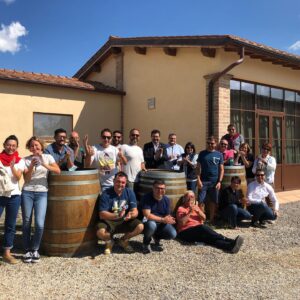
Tuscan party for the inauguration of the winery of the Fattoria del Colle, almost a palace for Cenerentola wine that becomes princess of Doc Orcia


On June 26th, Donatella Cinelli Colombini will inaugurate the expansion and restoration of the Fattoria del Colle winery with the blessing of Bishop Stefano Manetti and a “déjeuner sur l’herbe”, for 150 people. Typical Valdorcian dishes will be served accompanied by Brunello, Orcia Doc, Chianti Superiore and Supertuscans. A country party according to the great Tuscan tradition to celebrate the conclusion of a project that allows to increase the quality of wines and transforms the Fattoria del Colle into a wine destination capable of attracting enthusiasts and offering them unforgettable experiences and tastings.


CENERENTOLA WINE UNDERGROUND CELLAR

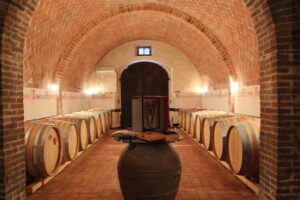
The main creation is a large underground area intended for the refinement of bottled wines for which 3,366 mc of earth and rock (231 hours of jackhammer by the Edilpellegrini Company) have been moved. The project by architect Silvia Nucci, from the Studio Luigi Rocchi,included a single large room of 450m2 for the aging of bottled wine.

Here the temperature must remain at constant 16°C while in the area for sparkling wine it drops to 12°C.  It is in this area, separated by panels, that the pupitres have been placed for the manual remuage of the brut rosé classic method obtained from Sangiovese grapes.


Cenerentola-wine-underground-cellar-Fattoria-del-Colle-Tuscany

Cenerentola-wine-underground-cellar-Fattoria-del-Colle-Tuscany

A WINTER OAK WOOD TRANSFORMED INTO A CORTEN SILHOUETTE

Outside Donatella Cinelli Colombini asked the designers and artisans who worked at the construction site – all local -, to be inspired by what they saw around them. Donatella is in fact a strong opposer of the “non-places” that take away identity from the territories. From this request and from the long months of lockdown, which have confined everyone around the house, the idea was born to reproduce in metal the oak woods near the Fattoria del Colle.

In winter the noblest trees of the Mediterranean scrub, become a lace of bare branches that rise to the sky. The young architect Elisa Boldi (Coima) designed them as silhouettes and cut them with laser on iron slabs making them then get rusty so that they had the same colour as the trees. Finally, the corten forest has been put, for 50 meters, around the new cellar and delimits the panoramic terrace above.

The silhouettes of the oaks allowed the designer Silvia Nucci to create continuity between the new building and the pre-existing part with the fermentation room, the bottling area and a farmhouse built about a century ago. In this last building the immersive room has been built, with the antique bottle library and a system of images, sounds and lights that teaches wine lovers to “listen to the vineyards”.


Zuppa di pane di Dante, a fourteenth-century flavour

In the occasion of the seven hundred years since Dante’s death, the restaurant at Fattoria del Colle will serve this Tuscan fourteenth-century bread and vegetable soup. You will taste the Middle Ages


Zuppa-di-pane-di-Dante-Fattoria-del-Colle-Doriana-Marchi-Donatella-Cinelli-Colombini

Zuppa-di-pane-di-Dante-Fattoria-del-Colle-Doriana-Marchi-Donatella-Cinelli-Colombini

By Donatella Cinelli Colombini

Beans, autochthonous Tuscan plants that the expert botanist Caterina Cardia has planted in the vegetable garden at Fattoria del Colle, as well as onions form Certaldo, extra virgin olive oil form our olive groves and home baked bread by our chef Doriana Marchi with sourdough…. All to create a soup similar to what Dante would have eaten in 1300. That year the supreme poet went to Rome along the Via Francigena which, in the southern section of Siena, crosses the Valdorcia. Wanderers stopped to sleep in the Spedali along the way. They prayed and consumed very simple dinners based on local dishes.


A SOUP THAT TEACHES MEDIEVAL HISTORY

Bread soups with beans and vegetables were typical of the countryside and Dante certainly ate them very often. In the Trequanda area, about 20 km from the via Francigena, bread soups were enriched with a few pieces of pork as the housewives still do today.

However Dante’s bread soup at Fattoria del Colle is certainly better than the one that fed the supreme poet on the long journey to Rome but the ingredients are almost the same. For this reason we can consider savouring this soup a cultural experience even more than a gastronomic one: a direct knowledge of the Tuscan Middle Ages.


INGREDIENTS FOR THE ZUPPA DI PANE DI DANTE

Half a kilo of black-eyed beans, a Certaldo onion, a large slice of prosciutto and one slice of salted Tuscan rigatino, bread made with sourdough, half a glass of extra virgin olive oil, kale, chard, stork, other Tuscan wild herbs, parsley, salt and black pepper.


COLOMBINO ORGANIC EXTRA VIRGIN OLIVE OIL FOR KIDS

An extra virgin olive oil for kids in small metal jars with labels full of monsters. To make children love the healthiest product on earth: oil


Colombino-extra-virgin-olive-oil-for-kids-at-Fattoria-Del-Colle-Tuscany-Donatella-Cinelli-Colombini

Colombino-extra-virgin-olive-oil-for-kids-at-Fattoria-Del-Colle-Tuscany-Donatella-Cinelli-Colombini

The days of snacks based on bread, freshly picked tomato from the garden, oil and salt are long gone. They had a wonderful scent and taste but also a less attractive look than snacks.
Yet it is precisely ancient and natural foods that make children grow up healthy.

<<Let’s try to give a more baby friendly look to healthy foods starting with extravirginoliveoil>>. From this idea was born children’s oil packaged in metal jars covered with a label full of GANGHERETTI small monsters designed by the painter Alessandro Grazi. The cans are small so that children can pick them up on their own (0.25 and 0.50 L) and have a space where each child can write their own name.


OIL FOR KIDS FROM FATTORIA DEL COLLE

The extra virgin olive oil inside the jars is ORGANIC and comes from the 6 hectares of olive groves at Fattoria del Colle in the inner Tuscany. They are located on high hills (400 meters above the sea) that are well ventilated, with sandy soil where olive trees have been cultivated for over 2000 years. The olives of the Correggiolo and Moraiolo varieties are harvested by hand with small rakes and then squeezed at low temperature in the Sant’Angelo di Castelmuzio olive mill 10 km from the farm. All done with the utmost respect for tradition and nature.
But let’s go back to the Gangheretti, that is, the little monsters on the label. These are the goblins who inhabit Fattoria del Colle and that are told about in a fairy tale that I transcribed below. Once upon a time …


92 GANGHERETTI

It was the beginning of time and there were only woods. The first farmer felt that there was something magical at the Colle and tried to get it out of the land.

Every night he slept in a different spot until he felt where his heart was happiest. He had a nail-like plow, he waited until midsummer night and stuck it on the ground three times. The magic broke free like a breath of wind that moved the leaves, made the flowers bloom and wove the farmer’s long beard like a fork into a plate of pinci. One by one, 92 goblins came out of the hole. They were blue, with a garlic-like little body but they smelled like lavender.


TRADITION ATTRACTS VISITORS AND CUSTOMERS MORE THAN INNOVATION

Which wineries attract wine tourists the most? Do they like more traditional food or that of technologically advanced companies?


Farmhouse food beats technologically advanced food

Farmhouse food beats technologically advanced food

by Donatella Cinelli Colombini

Many will answer <<famous wineries>> and it is true. Wine super brands are strong magnets for wine lovers. But among the various types of wineries it is not the masterpieces of the archistars or the giant and innovative creations that enter the hearts of visitors but the boutique cellars where everything speaks of the producer’s passion in grasping the magic of nature transforming it into unique nectar different from any other.


FARMHOUSE FOOD BEATS TECHNOLOGICALLY ADVANCED FOOD

Tradition and manual care are the most appreciated things. If you ask the wine tour guides they will tell you that if visitors see the producer come out of the vineyard dirty with soil to welcome them … that’s it, customers will fall in love with him.

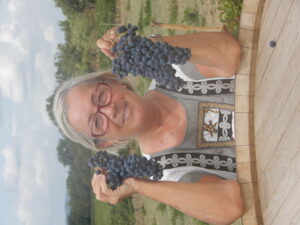
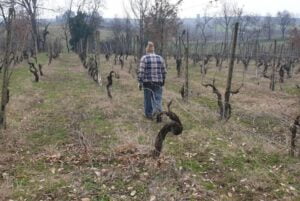
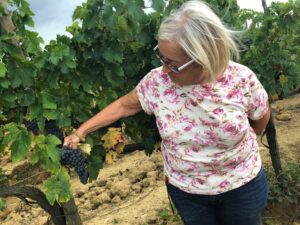
tradition and manual care win on technology in front of turists' eyes. Violante Cinelli Colombini in the Brunello vineyard.

tradition and manual care win on technology in front of turists’ eyes. Violante Cinelli Colombini in the Brunello vineyard.

For this reason it is always better to begin the guided tour of the winery from the barrel ageing area rather than from the areas where steel and technology are the protagonists, such as the fermentation room or the packaging area.

In fact, already in her second Report on Food and Wine Tourism Roberta Garibaldi noted that the charm exercised by ancient traditions was an element capable of standing out above others: in her survey, the greatest increases in interest were recorded in historic restaurants and cafes, the tasting of typical dishes in their area of origin.
All trends that have been amplified by the epidemic, the lockdown and forced quarantine in the city. The Nomisma-UniCredit Tourism Observatory, in partnership between Enit for the “Made4Italy” project, has highlighted the growing importance of the “Food experience” during a trip and how it is increasingly linked to the territory, culture and local traditions. For this reason, 28% of the hospitality facilities are preparing food and wine tours on the territory to allow tourists to enter typical wineries and food workshops while 24% will offer menus based on local products and raw materials “farm to table”.


AGRICOLTURE AND WINE BETWEEN TRADITION AND INNOVATION

Agriculture and wine in Europe face great challenges: green-deal, next generation, Farm to Fork, Biodiversity … innovation is an obligatory path but they must remain faithful to themselves and to their roots if they do not want to lose charm and customers.
The Nomisma-Agrifood Monitor survey in collaboration with Crif shows us how 45% of Italians perceive the agri-food products of “traditional” companies as superior to those of technologically advanced companies. There is even an 18% willing to pay more in order to have genuine farm food. But at the same time a majority share of consumers (54%) calls for agriculture to take a step forward in the name of sustainability and therefore of innovation.


CLUB OFFER OF 6 MIXED WINES

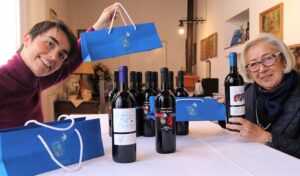
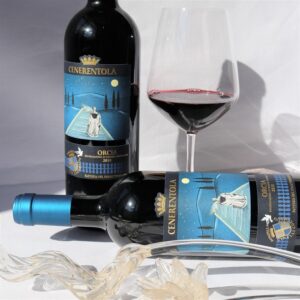
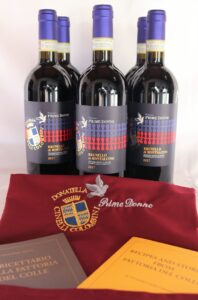
6 different wines for two memorable dinners: IGT Supertuscan white and rosé. Doc Orcia Cenerentola, Brunello IOsonoDonatella, highly rated Vin Santo and Passito


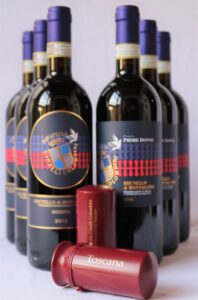
Brunello-IOsonoDonatella-Cenerentola-Doc-Orcia

Brunello-IOsonoDonatella-Cenerentola-Doc-Orcia-Donatella-Cinelli-Colombini-Tuscany

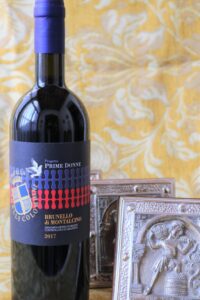
Exclusive wines real rarities made in limited number of bottles. Family wines obtained from the grapes from the vineyards belonging to Donatella Cinelli Colombini and aged in the Casato Prime Donne winery in Montalcino and in the Fattoria del Colle in Trequanda, Tuscany. Wines destined to the more demanding of wine lovers and to those who want to experience unique moments enjoying extraordinary and rare bottles. These will be delivered directly to your home.


3 WINES FOR A ROMANTIC DINNER

–  1 bottle of Sanchimento IGT Toscana Bianco 2020 Biologico, organic, in preview (a series of 2.000 bottles)

Passito-VinSanto-Donatella-Cinelli-Colombini-Tuscany-May-Club-Offer

Passito-VinSanto-Donatella-Cinelli-Colombini-Tuscany-May-Club-Offer

–  1 bottle of Cenerentola Orcia Doc 2017, dreaming of the Val d’Orcia while waiting to come back to Tuscany (series of 9.300 bottles)

–  1 bottle of Passito IGT Toscana 2017, 0,375lt, to be served cool together with a creamy dessert … (series of 346 bottles)


3 WINES FOR A MEMORABLE DINNER

–  1 bottle of Rosa di Tetto IGT Toscana Rosé 2019, because a “Pink wine” is the best way to begin a great night (series of 2.000 bottles)
–  1 bottle of IOsonoDONATELLA Brunello di Montalcino 2012, the most important wine produced by Donatella. The very last bottles available that we hope will be opened in special occasions (series of 800 bottles)
–  1 bottle of Vin Santo del Chianti DOC 2008, 0,75lt to end with a sweet bang … if you do not finish the bottle there is no problem, because Vin Santo can be kept for months with its original cork as a closure (series of 600 bottles)


WHAT DOES WINE DESTINATION MEAN

Fattoria del Colle is a wine destination that attracts those desiring real and different experiences with wine. Here I explain what it is and why it is liked so much


Wine destination: new winery of Fattoria del Colle in Tuscany

Wine destination: new winery of Fattoria del Colle in Tuscany

by Donatella Cinelli Colombini

Those who think that only wine superstars attract visitors are wrong. Obviously, the more that winery is important and exclusive, the easier it is for them to attract visitors. Any wine lover, from the remotest place on the earth, will pack their bags and set off if they receive an invitation to visit Lafite or Romanée Conti. But the wine lover that comes to Tuscany maybe finds fascinating the idea of spending a day at Fattoria del Colle experiencing different activities that can enrich their knowledge in an old and authentic location. Mostly because they have the possibility of enjoying unique and moving moments.


WINE DESTINATIONS IN ITALY AND IN THE WORLD

Wine destination: spumante brut metodo classico sparkling wine - Fattoria del Colle - Tuscany

Wine destination: spumante brut metodo classico sparkling wine – Fattoria del Colle – Tuscany

Let us begin with some facts so as to understand the importance of standing out. If you look for wine destination on Google you will find nearly 150 million content pages. In the first page there are many lists and it is worthwhile to read them so as to understand what attracts a wine lover to one area with respect to another.
Vine Pair proposes a list with the first 10 wine destinations in the world. In first position is Paso Robles in California, followed by Valle de Guadalupe in Mexico and Piedmont in Virginia.
Europeanbestdestinations.com puts l’Alentajo in Portugal, followed by Bordeaux and the Valle del Douro on the podium.
Booking puts the Italian wine regions in a row for the first three positions Valdobbiadene, Barbaresco e Bolgheri.


WHAT MUST A WINE DESTINATION HAVE

As you can see the tourist wine destination are present all over the world and so it is not enough to offer a tour through the barrels with an explanation of the production method of the appellation of the area, to intercept visitors. One must concentrate on what makes the winery stand out. Wineries have very different characters: some of them have strong points in the prestige and in the old beauty, as in Champagne, in other cases the major attractions are the new facilities of the star architects as in Chile.

Brunello 2001 and 2004 retrospective tasting: just like with films

Two articles that help us enjoy the Brunello 2001 and 2004 guided by Eric Guido from Vinous and Monty Waldin from Decanter and the ratings are very high


Brunello di Montalcino Prime Donne 2013 - Donatella Cinelli Colombini

Brunello di Montalcino Prime Donne 2013 – Donatella Cinelli Colombini

by Donatella Cinelli Colombini


Two articles and two tastings to understand the evolution of Brunello, from a wine conceived to defy time to a wine that must associate longevity and youthful pleasantness. This is the passage from “Biondi Santi philosophy” to the new style in a large number of Montalcino producers.


THE TWENTIETH YEAR IS THE REVEALING ONE REGARDING LONGEVITY

Eric Guido, a super taster of Italian wines for Vinous, has tasted the Brunello 2001 explaining the reason behind such a choice <<So why twenty years? Why not ten or thirty? Because, in my opinion, it is the twenty-year mark that proves the potential of a Brunello vintage. At ten years, a classically structured vintage is still in its adolescent stages (think 2010). At thirty years, only the best wines will still be drinking well (think 1990). However, at twenty years, you can assess from a broad range of producers if the vintage is ready to drink now, drink soon, or continue to stash away in your cellar>>.


HOW THE BRUNELLO PHILISOPHY HAS CHANGED DURING THE LAST 20 YEARS

As has happened to me, during the last 20 years, many producers from Montalcino have gone through a great evolution. They have returned to a stronger rapport with the vineyard and to the use of larger barrels. The producers who had maintained a more traditional style even when the critics rewarded the Brunello aged in barriques and coming from vineyards in the warmer parts of Montalcino have been at an advantage.


DOPOBARBA DELLA TITA FROM FARMACIA SALVIONI

Two stories from Montalcino, one about the Farmacia Salvioni that starts in 1499 and one about La Tita that tells of post war times, first in UK and then in the Brunello gardens, and a dedicated aftershave, il dopobarba della Tita


Roberto and Fabio Salvioni in their pharmacy in Montalcino

Roberto and Fabio Salvioni in their pharmacy in Montalcino

by Donatella Cinelli Colombini

What binds theses two stories that tell of the true spirit of the Brunello town, is the Dopobarba della Tita (Tita’s aftershave) that the Farmacia Salvioni has created among its cosmetic production range, as it has been done for centuries in the old dispensaries, to dedicate it to their most faithful client.

It seems like something normal but instead the story contains an old and noble tale.


THE FARMACIA SALVIONI AND ITS HISTORY SINCE 1499

The Farmacia Salvioni is in the old market square in Montalcino next to the Loggia, where vases, copper objects, vegetables, chicken and grains were sold.

Farmacia Salvioni in Montalcino: Dopobarba della Tita (Tita’s aftershave)

Farmacia Salvioni in Montalcino: Dopobarba della Tita (Tita’s aftershave)

In 1499 in those 4 rooms used still today, Paolo Dei and Giacomo Marzuoli <<ilcinenses aromatarios in civitate ilcinea>>, were apothecaries, in other words pharmacists.

At the beginning of the 17th century the dispensary in the square changes hands it goes from the Tinelli family to the Angelini family and is active in the production of therapeutic preparations and of spices to cook with: pepper, almonds, isinglass …  but also cakes such as pan pepato, copate and biricoccoli.

At the beginning of the 18th century the pharmacy changes hands several times until it is donated to the Ospedale di S. Maria della Croce who entrusts it to the young pharmacist Clemente Santi who later became the owner. The beautiful bronze mortar dated 1751 and with the coat of arms of S. Maria della Croce, still today proudly on show comes from that period.

In 1814 in the pharmacy we find his grandson, he too called Clemente Santi, with a degree in pharmacy from the University of Pisa where Giorgio Santi teaches natural history and has a fantastic reputation. Clemente was intellectual, very dynamic and with historic-artistic interests as well as agricultural ones, corresponds with the Accademia dei Georgofili, collaborates with the Giornale Agrario Toscano and can be considered one of the “founders” of the Brunello wine and of the Biondi Santi family.


Happy Easter

Happy Easter, I wish for every one of you to receive new strength on the day of Resurrection


I am convinced that this strength reaches all of us, even those who do not believe, because it is the energy of love <<L’amor che move il sole e l’altre stelle>> (the love that moves the Sun and the other stars) that Dante describes in the last verse of the Paradiso.


Gabriele Gorelli the first Italian Master of Wine

He is from Montalcino a polyglot, kind, intelligent, a great worker and communicator, he knows and understands wine … the first Italian Master of Wine Gabriele Gorelli


Brookshow and Gorelli Brunello nel cuore book

Brookshow – Gabriele Gorelli, Donatella Cinelli Colombini, Fabrizio Bindocci: book “Brunello nel cuore”

by Donatella Cinelli Colombini

Upon receiving the message of congratulations from Violante and me he replies <<Dear friends, I know you have always believed strongly in me. This encourages me and makes me proud of the Tuscan and Italian entrepreneurial structure. It has been difficult, very difficult. I still cannot believe it … Thank you so much , G.>> Just a few words that transmit the great tension, still not assimilated, with respect to a trail that has been demanding more than expected and the subsequent great emotion. Practically under shock, for the success, chased for 5 years and that all of Italy has been waiting for, for at least thirty.


ITALIAN WINE EXPERTS WHO HAVE DIFFICULTY IN ESTABLISHING THEMSELVES BY REMAINING IN THEIR HOMELAND

It really seemed like a running joke, among the 418 Master of Wine there were wine experts from 32 nations but nobody from Italy. Practically a stamp of our wine provincialism manifested far too often: let us remember the embarrassing occasion of the tem contest for sommeliers on October 12th 2019 at the Castle of Chambord in France, where our team were last out of 27 nations taking part. Two times in a row this happened.

Benvenuto Brunello: the ceremony behind the scenes with Gabriele Gorelli

Benvenuto Brunello: the ceremony behind the scenes with Gabriele Gorelli

Our wine experts are technically very strong and when they go abroad they are like fireworks. Think of Matteo Montone, from Milan living in London who won the title of Best Young Sommelier in the World in 2019 and, last summer became part of the Court of Master Sommelier. In this association too there are 267 members from all over the world, only two are Italians, both work abroad though.
The most sensational case however is Paolo Basso who won the title of Best Sommelier in the World ASI in 2013 competing for Switzerland.
Gabriele Gorelli seems to defeat this cliché of provincial Italians in their homeland able to bloom only abroad. In fact Gabriele is a young DOCG born and bred among the Brunello vineyards, his grandfather had a small piece of land, and he has never changed is residency.


How to place wine glasses on the table

A brief note on wine glass etiquette. How to place them on the table and when to remove the glassware apt for appreciating the Bacchus’s delicacies


How to place wine glasses on the table

How to place wine glasses on the table

by Donatella Cinelli Colombini

The rules are few and simple: wine glassware is positioned from right to left. The wine glass for the entree is the first on the right and the one for dessert is last on the left. Better to use glasses without a stem for water so as to make it easier to identify.


BEST USE A TUMBLER FOR WATER AND STEMMED GLASSWARE FOR ALL WINES

A while back the water glass was the largest but with the arrival of noticeably larger wine glasses it has been necessary to find a practical alternative so as to not occupy too much space on the table. Those used to the old etiquette, however, often pour water into the large wine glasses for red wines and then feel terribly embarrassed. The new wine glasses are in fact much more bulky than the “old style” ones but also much easier to wash. I can remember the nightmare of washing the etched and engraved crystal glassware around 50 years ago, that would chip at the slightest contact, and would cut the hands of those washing them like razors. They were so impractical to remain nearly always shut in cabinets and so they would get passed on from generation to generation, clutter that nobody knew what to do with.


Wine glasses on the table at the restaurant

Wine glasses on the table at the restaurant

ENOUGH OF THIS REVERENTIAL FEAR OF CRYSTAL GLASSES, THEY ARE INDISPENSABLE TO TASTE WINE

The prices of crystal wine glass have been reduced a lot and at present it is possible to buy “singing crystal” at less than four euro each glass. So now there is a much less reverential rapport towards crystal ware and laying the table has lost the magical charm, like a religious rite, it had long ago.
I like to put all the glasses on the table before my guests sit down but this forces me to limit it to four-five glasses per person so we taste only four or five wines. This is not a bad thing, meals with endless wine tastings, like long ago, and are considered inappropriate in the health logic of the new millennium. To avoid abuse and increasing the tastings one should use a wine spittoon but these must absolutely be avoided at the table.


Valentine’s Day and the Doc Orcia’s Birthday

The Doc Orcia wine region was born on February 14th 2000, Valentine’s Day, and Cenerentola is the right wine to celebrate it by saying: I love you; do you want to be my princess?


Orcia Doc, birthday for Valentine's Day, Cenerentola wine

Orcia Doc, birthday for Valentine’s Day, Cenerentola wine

by Donatella Cinelli Colombini

Doc Orcia, the denomination born under the sign of love, on February 14th, 21 years ago. An act of love towards a territory chosen by Unesco as a world heritage site for its rural landscapes formed by mankind during the centuries. It is Still surviving today maintained intact like a masterpiece in harmony between nature, history and men.


DOC ORCIA, TWENTYFIRST BIRTHDAY ON VALENTINE’S DAY

An image of beauty that Orcia – the most beautiful wine in the world –  transforms into a liquid postcard to be enjoyed. A territory made up of high hills between the production areas of the Vino Nobile di Montepulciano and Brunello di Montalcino. In the past this region was hit often by spring frosts. Only with the recent worldwide climatic changes the Orcia grape growers have had continuity in grape production and have summed up the courage to compete with the two stronger wine regions close by, two older, more famous and stronger sisters.


The Tree of Gold in Lucignano

The Tree of Gold, in Lucignano, tree of love, where lovers can promise eternal love on Valentine’s Day

CENERENTOLA DOC ORCIA, A WINE THAT RESEMBLES A FAIRYTALE LOVE STORY

A story similar to that of Cinderella and that is the reason her name was given to the Orcia Doc wine produced at Fattoria del Colle by Donatella Cinelli Colombini. The finale is the same too: the Cenerentola wine has now surpassed the magical line of the 90/100 ratings by great international by critics (for the vintage  2016, it received 93 from Wine Spectator, 91 from Wine Advocate/Robert Parker, and 93 from James Suckling) and now has a small crown on the label like a true princess. The production is still limited, only 10.000 bottles per year, but the number of fans is rapidly increasing all over the world, and among them there are some real princes.

The story of this wine tells of those who start off at a disadvantage but in the end succeed. It is the story of a real challenge because Cenerentola has the harmonious vigour of the best Supertuscans but is made with only autochthonous Tuscan grapes  – Sangiovese and Foglia Tonda – the latter of which had been abandoned and has found new prospective of survival thanks to this wine.
A love story with a happy ending that transforms the Doc Orcia Cenerentola into an authentic symbol of romance. A wine that says to the loved one <<will you become my princess>> and transforms every man in love into a Prince Charming.


Polenta or pulenda with mushrooms

Polenta or “pulenda”, as we say in Montalcino, to keep warm in the winter a dish that brings joy and can accompany Cenerentola because both stay by the fireplace 


Ingredients for Polenta or Pulenda with mushrooms - Fattoria del Colle

Ingredients for Polenta or Pulenda with mushrooms – Fattoria del Colle

by Donatella Cinelli Colombini

I adore hunting for mushrooms and in the woods around Fattoria del Colle it is easy to find them. It is very difficult for me to come home empty handed and there is no need for physical exertion either. Few porcini but many pinaroli, lecciaioli, bigine, cappelle del prete, paonazzi, ordinali, but no ovuli. I also enjoy cleaning them, when I have time. I do not eat many but I am very proud to offer them to friends especially with Pappardelle or polenta.

Polenta or “pulenda” as we say in Montalcino, is the food for when it is cold and when the North wind blows or when it snows. To cut it with a bit of thread is already a feast, if then you add a glass of Cenerentola Doc Orcia, the fairytale with the lit fireplace with the copper pot … hoping that the Prince Charming will arrive.


INGREDIENTS FOR POLENTA WITH MUSHROOMS

For 4 people

Polenta or Pulenda with mushrooms: preparing it at Fattoria del Colle

Polenta or Pulenda with mushrooms: preparing it at Fattoria del Colle

Easy, takes about an hour

500 g of corn flour – large grain, 15 g of extra virgin olive oil, a spoonful of coarse salt and 2 lt of water.
For the dressing: two garlic cloves, extra virgin olive oil, 500 g of mixed mushrooms (fresh or frozen), 500 g of pureed tomato, salt, grated Parmigiano.


PREPARING THE POLENTA WITH MUSHROOMS

Put the water in a pot, add the salt and bring to the boil. Add the oil and then the corn flour keep whipping until it comes to the boil again. Lower the flame and continue cooking while stirring for 50 minutes. You need patience and strength, and the job finishes in turning up the flame for a couple of minutes so that the polenta comes away from the rim of the pot. Pour it onto a wooden board and cut with a cotton thread then serve and eat still hot.

We must look at red wine with more attention

Red wine reveals many of its secrets upon visual inspection: alcohol content, consistency, freshness, age … are all evident to the naked eye before reaching the nose or mouth


visual inspection of wine: colour

visual inspection of wine: colour

by Donatella Cinelli Colombini

Each of us during the Sommelier courses listened to the instructions regarding the visual inspection of the wine with a certain condescending air.

Do not deny it; it has happened to all of us.

To begin with it is the aroma and tastes that attract attention because they are a rediscovery of the senses, that for the past century we have all used very little. Our lifestyle and the structure of our brain privilege sight, while the use of the nose and tongue has progressively been reduced to a simple “I like it” or “I don’t like it”. The Sommelier course is often a way to rediscover aromas and tastes because slowly they become understandable messages.


SWIRLING THE WINE IN THE GLASS

For this reason the visual analysis is often underestimated whereas listening to people such as the World Champion Sommelier Luca Martini, it is easy to understand how important this is in understanding a wine. His first suggestion is to <<look at how the wine moves in the glass>> the slowness is typical in rich wines while the watery ones with no substance are much faster. Generally filtering worsens the situation.
The legs left on the inside of the glass once the wine has swirled tell us a lot especially the way they descend. More alcoholic components there are (ethanol, glycerol) closer together the legs will be.


Cinelli Colombini
Privacy Overview

This website uses cookies so that we can provide you with the best user experience possible. Cookie information is stored in your browser and performs functions such as recognising you when you return to our website and helping our team to understand which sections of the website you find most interesting and useful.