




What do you want to book?


Forum: News and lifestyle

Federica Bertocchini is the Prima Donna 2017

The Casato Prime Donne Award 2017 goes to the biologist Federica Bertocchini and to the journalists  Pietro Di Lazzaro, Stefano Pancera and Vannina Patanè [caption id="attachment_12193" align="alignleft" width="199"] Federica Bertocchini winner of the Casato Prime Donne award 2017[/caption] Federica Bertocchini 49 years old, a molecular biologist from  Piombino has discovered the worm that eats plastic. A discovery that might resolve great environmental problems, especially in the sea where there is a floating isle of garbage the size of  Texas. Regardless the discovery, because of a shortage of funds for research Federica, for the past few months has been unemployeed. To  Federica Bertocchini and...

Millionaire chefs, here are Italy’s richest

The millionaire Italian chefs are the Carea brothers form the Da Vittorio restaurant with 15.461.86515 € followed by  Alajmo and by Cannavacciuolo [caption id="attachment_12167" align="alignleft" width="300"] Massimo Bottura e Donatella Cinelli Colombini, Italia a tavola award[/caption] By Donatella Cinelli Colombini, Toscana, agriturismo, Fattoria del Colle   The list of golden hobs, the richest Italian chefs , published by Dissapore and by Corriere della Sera, subsequently commented by Cronache di gusto, leaves us speechless for the volume of business that rotates around these prized chefs, the most famous the most seen on tv. Enormous amounts of money. Her is the list proposed by Corriere della...

James Suckling Cavaliere della Stella d'Italia

Magnum party with 200 great big bottles to celebrate James Suckling, who has been nominated Cavaliere della Stella D’Italia for having promoted Italian wines the world over

James Suckling Cavaliere della Stella d'ItaliaBy Donatella Cinelli Colombini, Montalcino, Brunello, Casato Prime Donne

<< I am deeply honoured and touched>>  wrote James Suckling after having received the diploma of Cavaliere dell’Ordine della Stella d’Italia from the representative of the Italian government in Hong Kong. Recognition much deserved for he who has promoted the knowledge of Italian wines all over the world and especially in Asia for thirty odd years. <<I Hope to be doing it for twenty more years with wines always better>> he said welcoming wine producers from all over Italy come to celebrate him. Among them were Antonio Rallo and Francesca Planeta from Sicily and Anna Abbona (Marchesi di Barolo) and Stefano Gagliardo from Piedmont, but the larger group was certainly from Montalcino, the land that maybe  Suckling loves most and the territory that more than any other he has contributed in promoting.

James Suckling magnum party

James Suckling magnum party

The MAGNUM PARTY took place at the Acquolina restaurant in Terranova Bracciolini, near Suckling’s Tuscan home. It has been the most choral and exclusive party of the Italian wine world, with a selection of wines worth of the host and with the possibility of tasting about 200 larger sized bottles of stellar quality. Tables among the olive trees, Australian DJ who came especially for the event and many very famous personalities from Italian wine.

Assistance for European Wine producers and international envy

700€ per hectare and 0,15€ per litre of wine, this is the assistance for European Wine producers that the rest of the world looks at with envy,without considering the off-set

Assistance-for-European-wine -producers-for-exportation

Assistance-for-European-wine -producers-for-exportation

By Donatella Cinelli Colombini

It is well known that abroad the assistance for European wine producers and farmers is looked upon with suspect, as if they were a disturbance to competition but in a dishonest way. And wine is one of the products to be questioned.

A few years ago, to be able to export, all wineries were forced to send to China a declaration stating what contributions had received. It all ended when Europe accepted the commercialization of Chinese solar panels.

The last episode of this saga is the article “How Much Government Assistance Do European Wine Producers Receive?”published by the Journal of Wine Economics by Kym Anderson from the School of Economics in the Adelaide University and by Hans G. Jensen of the Institute of Food and Resource Economics from the Copenhagen University.

These two academics have estimated the European aids to be an average of 700€ per hectare and 0,15€ per litre of wine so roughly a nominal tax rate of about 20%of costs.

Assistance-for-european-wine-producers-for exporting-to Brazil

Assistance-for-European-wine-producers-for exporting-to Brazil

An enormous amount 2,341 billion per year, of which France alone gets about one third of the total (830 million Euro), Italy and Spain about a fifth each 570 the first and 405 the second) while all the other nations are under 100 million Euro.

If we go and see these total we realize that the vineyards with most contributions per hectare are the Austrian ones .They get 2.400 € so more than double everyone else. After this initial help the aid per hectolitre of wine is superior in Austria with respect to every other European nation: 370€. In this list we find  Slovakia in second position then Slovenia, Check republic, Portugal, France and Bulgaria all above the European  average of 145€, while we in Italy are below with 140€.

Richness and poverty in front of Moet et Chandon

How long must you work to be able to buy a bottle of Champagne? In Italy you need the equivalent of three hours of work but in Nepal a month’s salary is not enough By Donatella Cinelli Colombini, Doc Orcia, Fattoria del Colle The image of a world divided between rich and poor is evident even in the quantity of work that is needed to buy a luxury product such as  Moët & Chandon: in nations that are more economically developed it is affordable by the a vast majority of the middle class and in places like  Kenya, Ghana or India practically...

A crest helps sell wine

What are you doing without a crest? The family coat of arms helps sell wine and business possibilities increase if there is a picture of the place of origin

Crest/helps/sell/wine/Giacomo-Conterno-Francia-Barolo

Crest-helps-sell-wine-Giacomo-Conterno-Francia-Barolo

By Donatella Cinelli Colombini, Montalcino, Brunello, Casato Prime Donne

Thoes who haven’t got a blazon might run to an expert and get one created for their name or their winery. In fact the charm that binds nobility and history, that mixture of mystery and richness that a coat of arms signifies, is still very strong and  so a crest helps sell wine. So this has its effect and not only on the simplest of people who think of the Prince Charming who lives in a castle with its drawbridge, but also on those with a degree and great salary. The noble coat of arms gives a bottle great prestige.

This is the surprising revelation of the second survey Spot & Web carried out with the WOA method (Web Opinion Analysis) through monitoring the most important social media networks and on a sample of 500 people between 25 and 60 years of age, analyzed by a pool of psychologists coordinated by the psychologist Serenella Salomoni.

Crest-helps-sell-wine-Ornellaia

Crest-helps-sell-wine-Ornellaia

So here is what influences the consumer: the blazon (26%), the name (22%), the image of the place of origin (17%), the label (14%) and the bottle (11%).

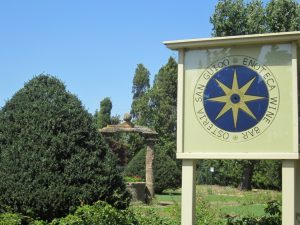
Without of course diminishing the value of the quality of the wine, of the appellation or of the brand, this survey has evidenced how important it is to show off the aristocracy of the producer and of the castle, villa or monumental building where the wine is produced. Here in fact is a list of the favourite labels: first of all Barolo Francia di Giacomo Conterno , in this label the blazon is on the background, in second place  Ornellaia by Tenuta dell’Ornellaia with an image of the original building and the noble crown ( respectively with 21 and 19% of votes). Follows Amarone Classico Calcarole di Guerrieri Rizzardi, and in this case too there is the coat of arms and the drawing of the estate (17% of preferences). Barolo Monprivato di Mascarello Giuseppe e Figlio with a very large coloured crest. In the  Sassicaia from Tenuta San Guido there is the Marchesi Incisa della Rocchetta compass rose.

Casato Prime Donne Award 2017

A few days left to send to the Casato Prime Donne Award secretariat articles, videos and images published between June 1st  2016 and 2017

Casato Prime Donne Award 2017

Casato Prime Donne Award 2017

Within June 15th articles or photographs regarding the wine territories Brunello and Orcia must be sent to the award secretariat to participate in the 19th edition of this event. This award year after year grows in visibility and appreciation. It has the goal of expressing gratitude from the territory towards those who promote its culture and the wine productions but most of all its scope is to emphasize women who propose new models of femininity. During the years the Casato Prime Donne award has anticipated times by giving recognition to special women, not yet well known, who later have done memorable things such as Samantha Cristoforetti who 4 years after receiving the award went into space. Or it has emphasized the civil courage of a great astrophysicist who came back from abroad to teach in an Italian University – Sandra Savaglio – or like the young Muslim who opposes terrorism by risking her own life – Chaimaa Fatihi. The Casato Prime Donne puts a spot light on a new way of being woman in a society that is changing and asks the female gender for a contribution in courage, ethics ad positive examples.

The jury made up of Donatella Cinelli Colombini

Carlotta Annibale and Giuditta Parisi Points of View Montalcino Casato Prime Donne

Carlotta Annibale and Giuditta Parisi Points of View Montalcino Casato Prime Donne

president, Rosy Bindi, Anselma Dell’Olio, Anna Pesenti, Stefania Rossini, Anna Scafuri and Daniela Viglione represents in its compound character and in its multidisciplinary competences an privileged observation of the present society and has been able to give substance and messages to the Casato Prime Donne award making it a great instrument for social and territorial promotion. The jury works side by side with the mayor of Montalcino, with the President of the Consorzio del Brunello Patrizio Cencioni and with three personalities: Mario Fregoni, Leone Piccioni and Sergio Zavoli.

Wine Glasses: how to choose them and how to keep them

In wine glasses the stem breaks easily, the cup might cut your hand while you wash them and most of all the cloudiness of the crystal…What to do?

By Donatella Cinelli Colombini, Toscana, Brunello, Casato Prime Donne

most -expensive-wine -glasses- in-the-world-by-john-calleija

most -expensive-wine -glasses- in-the-world-by-john-calleija

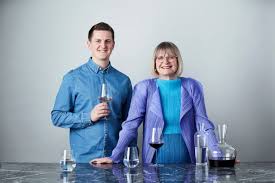
Obviously the shape of the glass is fundamental to taste wine but it is not the only element to be considered when we buy a set of glasses. I’ll not be talking about prices as there are incredible differences: from the 400.000 $ for the Champagne flutes by John Calleija’s in quartz crystal that make cheap even the 150$ for the Lalique 100 points by James Suckling to then get to the  6 € for a normal goblet at the supermarkets.

Wine-glasses-Osteria-di-Donatella-Fattoria-del-Colle-Toscana

Wine-glasses-Osteria-di-Donatella-Fattoria-del-Colle-Toscana

Wine glasses especially for those who use and wash them often, must remain sparkling and not be delicate. The most fragile parts are the rime and the stem. Let’s avoid very thin cups, that might be elegant to chip very easily and are like razors when drying the glasses by hand- My husband Carlo still has the scar from a Riedel cut on his hand. The stem is however the most critical part. If we want glasses that last a long time it must be quite thick. Hand blown glasses, where there is no joining between cup and stem, are the most delicate. Then there is the intermediates type, hand blown cup and industrial stem- But must glasses are made mainly machine.

Is it time for High Altitude Wines?

1.200-1500 meters up, a race upwards. Once it was called heroic viticulture, now it seems that high altitude wines are the new frontier against global warming


High-altitude-wines -Val d'Aosta - Morgex - Cave du Vin Blanc - Nicola del Negro, wine- maker- and-sales-manager. check -"Piagne" -vineyard with Priè Blanc grapes

High-altitude-wines -Val d’Aosta – Morgex – Cave du Vin Blanc – Nicola del Negro, wine-
maker- and-sales-manager. check -“Piagne” -vineyard with Priè Blanc grapes

By Donatella Cinelli Colombini, Toscana, agriturismo .

Let’s start from Wine Searcher and from a very interesting article by Wink Lorch that I suggest you read, for its reflections regarding High-Altitude Wines, of which producers talk always more and more.

Altitude signifies freshness: the average temperatures are lower and so the alcohol is low and the acids increase resulting in fine and elegant wines. Also often in high altitude there is a big difference between day and night temperatures with exceptional results in the synthesis of the floral and fruit aromas.

Altitude signifies intensity: in high altitude the sunlight is stronger and with more  UV-B rays. This fills the grapes with antioxidants, the grape skin gets thicker and takes into the wine quantities of tannins, excellent anthocyanins. These increase the intensity of the fruit and the ability of the wine to age.

High-altitude-wines-Cave Mont Blanc,

High-altitude-wines-Cave Mont Blanc,

The direct testimony of those who have vineyards over 1000 meters in height on the Etna , such as Santa Maria la Nave, confirm all of this and bring the attention on the less pollution in the air and the better ventilation.

Altitude means contrast to global warming: in the traditional grape growing regions maintaining the right alcohol-acids equilibrium is getting more and more difficult because of the warmer temperatures. The high altitude vineyards can be a valid alternative.

Champagne and its discounts: suicide?

Maybe it is the “Prosecco effect” but there are definitely many Champagne producers offering their bottles at really incredible prices. Will the myth of the most famous bubbles in the world resist?

French bubbles

Champagne

By Donatella Cinelli Colombini, Toscana, Brunello, Casato Prime Donne

If we consider that the grapes for  Champagne cost 6€ per Kg and the production costs about  9€ to which taxes must be added, it is difficult to understand how a bottle of French bubbly can be sold at 10 Euro. But it happens. We must consider that these wines cannot be sold not bottled, it must finish its time on yeasts in the production area until the  degorgement and the capping with the traditional mushroom shaped cork. So the large distribution chains buy in bottle from the  wineries. However there is a short cut:  the sales “sur latte” , when the wine is still on the yeasts and before the recapping. A system that is useful to give liquidity to wineries and get the less prestigious cuvées out even if with a great sacrifice in price. Obviously, these quantities of wine, that generally bear a label of a chain of supermarkets, are qualitatively worse, and because of their low prices, damage the  Champagne reputation.

Spumante or Champagne

Spumante or Champagne

For this  reason Toubart of the Syndicate des Vignerons, said to Wine Searcher “Champagne’s strength is that it is a beverage that is consumed on special occasions; because of its relatively high price, it has always been a rarity, to be treasured. Price dumping endangers this, it can turn Champagne in to a commodity>>

.How can we say he is wrong, in fact the price too is a message. However the idea of getting rid of shop owners and distributors fearing to end up like Cognac where 4 buyers control the entire brand, does not seem applicable.

Fattoria del Colle's new photo album will surprise you

Touristy photos or real photos? The choice of a Photo album for a hotel is one of the most important. Here are those for Fattoria del Colle

Fattoria-del-Colle- Sant'angela

Fattoria-del-Colle- Sant’angela

by Donatella Cinelli Colombini

About the photos of tourist destinations there are two philosophies: the classical one that requires a professional studio and more and more frequently agencies specialized in tourism communication. The photos are captivating even though very standard with models, flowers, studied lighting, furniture moved into artistic layout and well coordinated.

Then there is the school of thought I would call “social media effect” where what is homemade, true and natural is privileged. Evidently the photos must be well done, pleasant, and descriptive but the main element is the authenticity “without tricks” because they must convince the future client who will find exactly what he has seen. As if the images were those taken by a tourist with a fabulous camera and a good eye. In other

Agriturismo-Toscana-Fattoria-del-Colle-twin -room-guardia

Agriturismo-Toscana-Fattoria-del-Colle-twin -room-guardia

words the photos that one posts on Trip-advisor.

For years I have followed this principle, proud that no client has ever said << from the images on the web site we thought it would be more beautiful>> on the contrary arriving at Fattoria del Colle, the general comment was quite the opposite <<I didn’t expect it to be so beautiful>>. With the passing of the years though I began to see the other side of the medal and I asked myself <<might it be that this casual image penalizes us?>>

In fact tourism is the most virtual product of this global era. It communicates with images and sells dreams. The client buys on the basis of an emotion and of the desires created through the sight of something…. Reality is something else.

Chianti, Toscana, Sangiovese, Barolo, Rosso

These are the 5 words most associated with Italian wines in USA. What is evident is the presence of Tuscany and Chianti

NY-Wine-Experience-Italian-wine-in USA-not -only- Chianti

NY-Wine-Experience-Italian-wine-in USA-not -only- Chianti

By Donatella Cinelli Colombini, agriturismo, Fattoria del Colle

This news comes from the report by “Wine Opinions Vinitaly Survey” and has been commented on excellently by Wine Meridian. In decreasing order there is a first group of words which includes Chianti, Toscana, Sangiovese, Barolo, Rosso and Dry followed by a second list of terms, that regard mostly the sensations that come from wine: Earthy , Prosecco, Food, Fruity , Robust, Diversity .

Here is first thought on the word Chianti that demonstrates how the effort to communicate Classico, selezione, superiore …. Has only been successful with those who work in wine while the public still gets confused … like when we say Bordeaux

Houston-seminary-Brunello-USA-not-only-Brunello-and-Toscana

Houston-seminary-Brunello-USA-not-only-Brunello-and-Toscana

and put all together the Premier Cru and the vin de pays, Margaux and the les Graves.

That there is this difference between the perception of wine lover and the general public is evident from the comparison of this list and the most frequent appellations written about by the International press shown by Regione Toscana at the inauguration of the Anteprime 2017.  Brunello was on top of the list before Chianti and Chianti Classico. While in the “Wine Opinion Vinitaly Survey” the prestigious red wine form Montalcino is stationed in a very peripheral position.

Vinitaly's story, where we too have a part

50 years of Vintaly told in a book. People, events, where I, like other producers have participated. A surprising story

Vinitaly 2016 and Donne del vino

Vinitaly 2016 and Donne del vino

By Donatella Cinelli Colombini Toscana, Montalcino, Casato Prime Donne winery

Did you know that Vintaly was born in Siena? It was called “Mostra mercato dei vini tipici” and took place in the Fortezza Medicea in Siena since 1933. It was the first step towards the appellations approved in 1963 and created three years later.

The wines were presented in a gazebo that every region built separately as if it were a small expo. The event lasted one month and attracted more than 100,000 visitors.

In 1967 Verona takes on the project of creating a wine event inside the Agricultural Fair space. This was already being organized since 1898. The creative genius is Angelo Betti, a volcanic man, from Emilia Romagna who launches the “Giornate del vino italiano” two days of meetings in the Palazzo della Gran Guardia in front of the Arena.

Sting-at-Opera-Wine-Vinitaly

Sting-at-Opera-Wine-Vinitaly

The name Vinitaly comes in 1971 with the move to empty buildings outside the historical centre. It is only mid-seventies that the mayor of Verona initiates the construction of the pavilions used today. These are the number 8 and 9 still used today, very small and simple compared to the present day sizes. Vinitaly used to take place at the beginning of December and had more than 500 exhibitors. The change of date to April happens in 1980 when the event used to last 8 days.

British Fizz: Her Majesty's Spumate

While the English producers are still looking for a name of their bubbly the Americans have already named it horribly: British Fizz

British-Fizz-Nyetimber

British-Fizz-Nyetimber

By Donatella Cinelli Colombini, Chianti Superiore, Agriturismo, Fattoria del Colle

British Fizz …..  sounds awful and make you think of fizzy hair. Then there are the FIZZ drinks, blended with lemon and soda. We all know Gin Fizz

So after thinking about this for a long time the sparkling wine producers could have chosen a name to give dignity to the bottle instead of a name used previously for the effervescence of soda.

Mamma mia, and to think that the English bubbles are very expensive.  Fizz what?

Not very convincing, in fact I would say the opposite of any marketing logic, it the way that the term has been chosen. This story is told in a nice article on The Drinks Business. It seems that it all started with the wine list at the Jones Wood pub in New York, this was photographed and posted on Twitter on the 5th of January. The list itemized 6 British Fizz followed by 11 Champagne and sparkling wines among which a Lambrusco. After this incident Bob Lindo chairman of the British association of producers UKVA declare to want to register the name FIZZ so that it becomes the name of the English appellation of sparkling wines produced with the metodo classico. In fact the project is fuller one as there would be then 3 English DOP regions:

British Fizz
British Sparkling
Wine from Great Britain. 

British-Fizz-Gusbourne

British-Fizz-Gusbourne

The Duchess of Cornwall, president of the UKVA commented Bob Lindo’s issue with a regal and British line <<new name needs to be found to better describe English sparkling wine>> suggesting a better and more representative name. A few days later however while the controversies were all over the press, the previous names seemed much more suitable than FIZZ. Particularly the term “Britagne” combining Britannia and Champagne.

To produce fine wines you must be single

Long hours, especially at harvest time, stress and hard work are the disadvantages for lady wine makers but there can also be problems with partners for both genders

By Donatella Cinelli Colombini, agriturismo, Toscana, Fattoria del Colle

Wine-makers-women-Eileen-Crane

Wine-makers-women-Eileen-Crane

An article on Wine Searcher regarding sexism makes clear the problematic of conciliating careers and professional ambitions with a normal life as a couple. The problem exists for both men and women wine makers but the latter to face enormous difficulties.

Certainly 30 years ago it was worse: suppliers gave “girly” calendars, and any women who progressed in this career got comment such as  <<she must have gone to bed with the boss>> but still today women’s wages are less than their male colleagues. <<There is a boy’s club feel in many wineries, and hiring women changes that>> says Eileen Crane with reference to those exclusively male contexts where one talks of football or about women together with the malolactic fermentation or autochthonous yeasts.

                                                                       
Cinelli Colombini
Privacy Overview

This website uses cookies so that we can provide you with the best user experience possible. Cookie information is stored in your browser and performs functions such as recognising you when you return to our website and helping our team to understand which sections of the website you find most interesting and useful.