





Is wine a family business?
Joys and sorrows of family wineries. To belong to a wine family dynasty offers better perspectives in imagine and in duration in time, as long as there are no rows

Lucia Buffo interviews Lunelli, Boscaini, Soldati, Nonino, Antinori
By Donatella Cinelli Colombini
By chance I see an article in Wine Searcher, the super portal from New Zealand. They publish the prices of wines from all over the world , from the best stores from all over the world. They always share also articles that are very very interesting. This particular article has this tile: “Family Wine affair, a Risky Business” and was written by Margaret Rand.
WINE FAMILIES, A STORY OF NOBLESSE AND ROWS
I come from a wine family; my vineyards are on this land since the end of the 16th century. So this subject regards me directly. Reading the piece by Margaret Rand one understands that mine is a privileged situation that creates a better appreciation of a brand and its wines. However the saying “you can’t choose your family” is perfectly apt for many particularly confrontational wine dynasties.

Gaja and Antinori
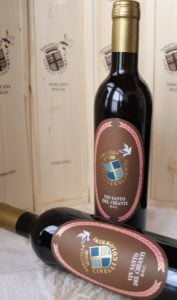
Soma explicit examples are quoted in the article, and it starts with my distant relatives the Biondi Santi family, then the Alvarez from Vega Sicilia, and finally the Mondavi’s where Robert has spoken of disputes, even physical ones in an autobiography.
THE WINE FAMILY ASSOCIATIONS
Unions such as Primum Familiae Vini, born 25 years ago ,were born because of the difficulty in creating cohesion among the family members of these historic wine dynasties. And of course because of the necessity to advise one another. Primum is made up of the real wine Gotha from the international wine world: Marchesi Antinori, Baron Philippe de Rothschild, Joseph Drouhin, Egon Müller Scharzhof, Famille Hugel, Champagne Pol Roger, Famille Perrin, the Symington Family Estates, Tenuta San Guido, Familia Torres, Vega Sicilia and Clarence Dillon. Obviously this is not the only partnership. There are also partners that have solely common sales objectives or those tied by shared scopes, such as the Famiglie dell’Amarone that are opposed to the Consorzio della Valpolicella.